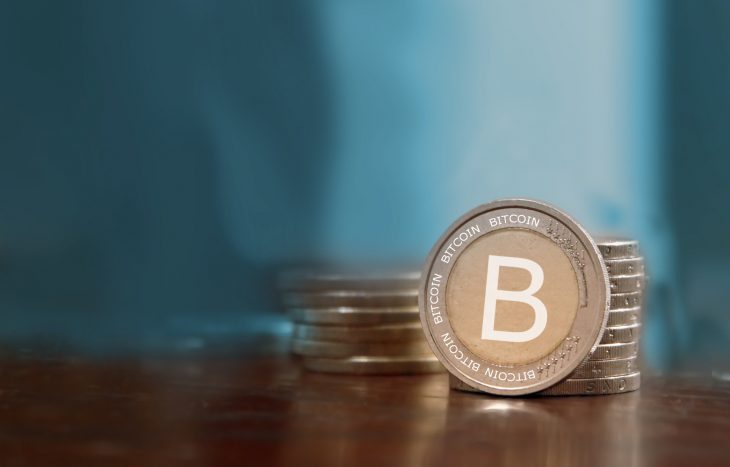
Cryptocurrency is a type of digital asset that uses cryptography to secure its transactions and to control the creation of new units. Cryptocurrencies are decentralized, meaning they are not subject to government or financial institution control. Bitcoin, the first and most well-known cryptocurrency, was created in 2009. Cryptocurrencies are often traded on decentralized exchanges and can also be used to purchase goods and services. Some businesses even accept cryptocurrency as payment. Cryptocurrencies are often hailed as the future of money, and their popularity has grown exponentially in recent years.
This opinion article in Bloomberg asks the question “Why is a technology threatening to decentralize money so attractive to highly centralized, authoritarian regimes?” The answer is obvious; it’s all about control:
“With Russia and China both embracing the idea of sovereign cryptocurrencies, it’s time to ask a simple question: Why is a technology threatening to decentralize money so attractive to highly centralized, authoritarian regimes?
Last weekend, Argumenti i Fakti, a pro-government newspaper, quoted Russian Communication Minister Nikolai Nikiforov as saying President Vladimir Putin had ordered the swift launching of a “crypto-ruble.” According to the report, Nikiforov said the currency would use “Russian cryptography” and would be impossible to “mine” like bitcoin because it would be “a closed model with a definite volume of regulated emission.” This follows statements by Central Bank Governor Elvira Nabiullina and Finance Minister Anton Siluanov, who stressed the need for the Russian state to bring cryptocurrency emission and use under control.
Nikidforov’s vague description of the crypto-ruble sounds similar to recent unofficial Chinese proposals. Yao Qian, deputy director of the People’s Bank of China’s technology division, has discussed a central bank-issued electronic currency for which commercial banks would administer “wallets.” Other Chinese officials and state-affiliated researchers have also echoed the idea.
To those who believe bitcoin’s main innovation is the exclusion of a central authority — a peer-to-peer system in which transactions are validated by “miners” — the interest of China and Russia is baffling. But those governments aren’t looking to give up control to the blockchain. On the contrary, they are trying to figure out how to lower the cost for a centralized issuer to control everything that’s going on in the financial system.”
The article continues with an explanation of all the benefits a cryptocurrency delivers to authoritarian regimes:
“Cash, however, has disadvantages for both central banks and governments. For one thing, it’s costly to print, mint, distribute and destroy. Changes to the banknotes and coins can take years to administer. Theft and robbery are risks. At the same time, cash is anonymous; criminals and tax evaders depend on it.
All these problems and some others — such as the time lags in a traditional electronic payment system as money moves between banks — can be solved if a central bank can issue its own cryptocurrency and have transactions registered in a bitcoin-like distributed ledger, verified by central bank-approved agents. If that sounds like a version of the traditional banking system, there is, potentially, a big difference thanks to the verifiers’ more limited role than that played by commercial banks. “With a lower entry hurdle to becoming a transactions verifier in a distributed system than to becoming a member bank in a tiered system, we would expect more intense competition in the provision of payment services,” Bank of England’s John Barrdear and Michael Kumhof wrote in a paper last year. “To the extent that existing systems grant pricing power to member institutions, this should ensure that transaction fees more accurately reflect the marginal cost of verification.”
The costs of running a monetary system would go down, payments between companies and individuals would speed up, and transactions would become traceable by governments, above all for tax purposes. Nikiforov talked of imposing income tax on the conversion of crypto-rubles into ordinary rubles unless their owner can show how the digital currency was obtained.”
The article points out that consumer opinion has an impact on the adoption of a cryptocurrency in less authoritarian countries:
“The Russian and Chinese plans do not envisage the elimination of cash at this point. But that would be the logical end goal, more attainable in Russia and China than almost anywhere else. In both countries, the state controls most of the banking systems’ assets, and the role of banks in the economy can easily be reduced by offering an alternative central bank-based system. In both countries, the governments are unconcerned by niceties like citizens’ right to financial anonymity: A good citizen has nothing to hide from them, or else.
In Sweden, where society appears to be voluntarily rejecting cash, the Riksbank’s eKrona project is a response to the changing circumstances: The Central Bank would like to keep providing the stability of cash in a form modern usage would allow. CADcoin, which is being tested by the Bank of Canada, isn’t meant as a means of retail settlement but rather a way of increasing the efficiency of the wholesale payment system. The Estonian idea of an initial coin offering for the Baltic nation’s 22,000 “e-residents” is not even central bank-backed.”
Perhaps an interesting consideration would be the impact central control would have on States Rights here in America. For example, the marijuana industry has been enabled as states passed regulations to legalize marijuana, but that would have been meaningless if the Federal Government controlled the only available currency and could prevent the sale. California would be out its predicted $5 billion in 2018 if the feds could control cash.
Overview by Tim Sloane, VP, Payments Innovation at Mercator Advisory Group
Read the full story here