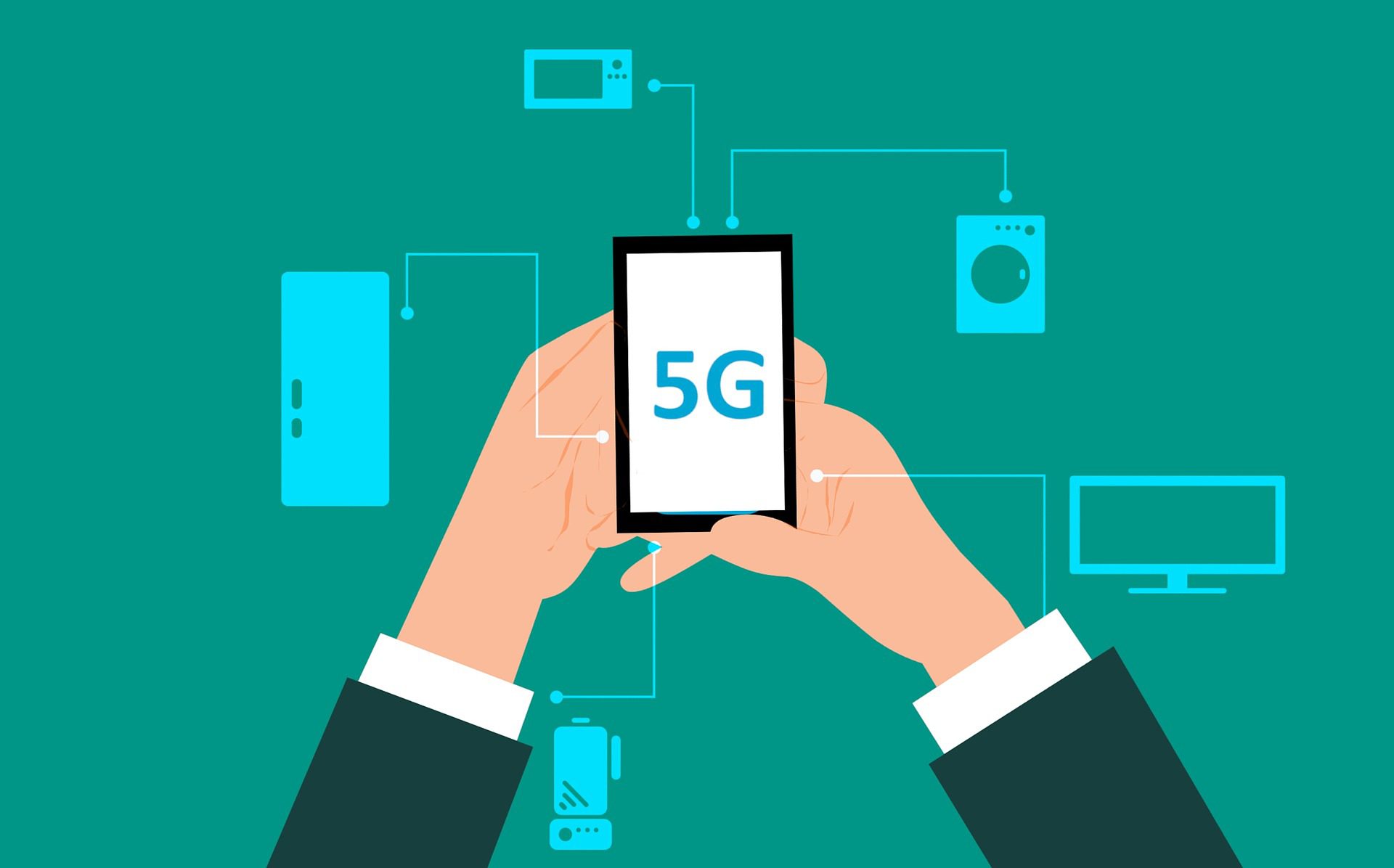
The argument is that 5G will drive IoT deployment and that IoT devices will utilize Blockchain as a layer of security. The W3C however is already securing DNS and HTTP in order to deliver greater security using the public/private key pairs also utilized by blockchain – so Blockchain may not be needed for security but may prove beneficial for data distribution – if it can be made to operate faster, much faster.
Today we have a number of Blockchain solutions some that operate over fast trusted networks and some other that claim to work faster, some much faster, over those unreliable networks. If the new Blockchain does operate quickly and efficiently over unreliable and insecure networks then 5G won’t make any real difference to Blockchain operations. However there has yet to be an independent mathematical proof that states those fast solutions will work and we have witnessed major challenges associated with rolling out a faster Ethereum, so perhaps we will be best served by relying on trusted nodes, connected by trusted and fast networks – so 5G can help. The thing is, if all the nodes are connected by fast and trusted nodes, that sounds like a perfect environment for operating a traditional cloud or distributed database solution, both of which will also benefit from 5G:
Referencing article by IBINEX NEWS
“The integration of 5G and blockchain can open up another area of technology innovation which is still in its nascent stage and trying to make the impact through its novel methods and techniques. Yes! We are talking about artificial intelligence which has the potential to drive up efficiencies especially across the industries where standardized operations make a major part of their production of goods or providing services.
Challenges and Bottlenecks
The major bottleneck while connecting the devices through 5G is related to their safety concerns, and that’s exactly where blockchain can be of immense help. Thanks to the high-security system of blockchain which provides immutable, tamper-resistance records, the issue of forging and hacking can be easily handled. Blockchain can certainly be used as a foundational layer between the various devices connected through IoT working with the help of 5G coverage. The decentralized nature of the blockchain also provides it an advantage over the current model of client-server used in the IoT industry. By virtue of its open ledger structure, the identity of the participating devices can be secured and protected without any external influence. As of now, the identification of the devices in IoT is made through cloud servers which have their own separate databases for the identification and other allied purposes. The security of these databases, however, is questionable and they are very much prone to hacking attempts. Their vulnerabilities have been exposed many times in the past and are one of the major concerns related to their clients who decide to park their data on cloud servers.
By using the blockchain, identity can be protected with the use of encrypted technology and secure algorithms. Each device will be having its own blockchain address and can be registered according to that particular address, thereby protecting its identity from the other devices. The layer of blockchain protocol will further enhance the security, and the currently developed decentralized infrastructure is good enough to provide secure operation at any particular period.
Having said that the blockchain could not solve the issue related to the scalability. The enormous extent of IoT signifies the fact that current blockchain infrastructure will not be able to handle millions of devices during their operation. This is especially true when one talks of handling the operations on layer one of the blockchain. The solution for this issue, according to blockchain experts and analysts, is dividing the security protocol into two layers. Just like the example of a lightning network which works on the principle of blockchain technology but uses side chains or other payment networks for carrying out transactions can be formally adopted for IoT also.”
Overview by Tim Sloane, VP, Payments Innovation at Mercator Advisory Group