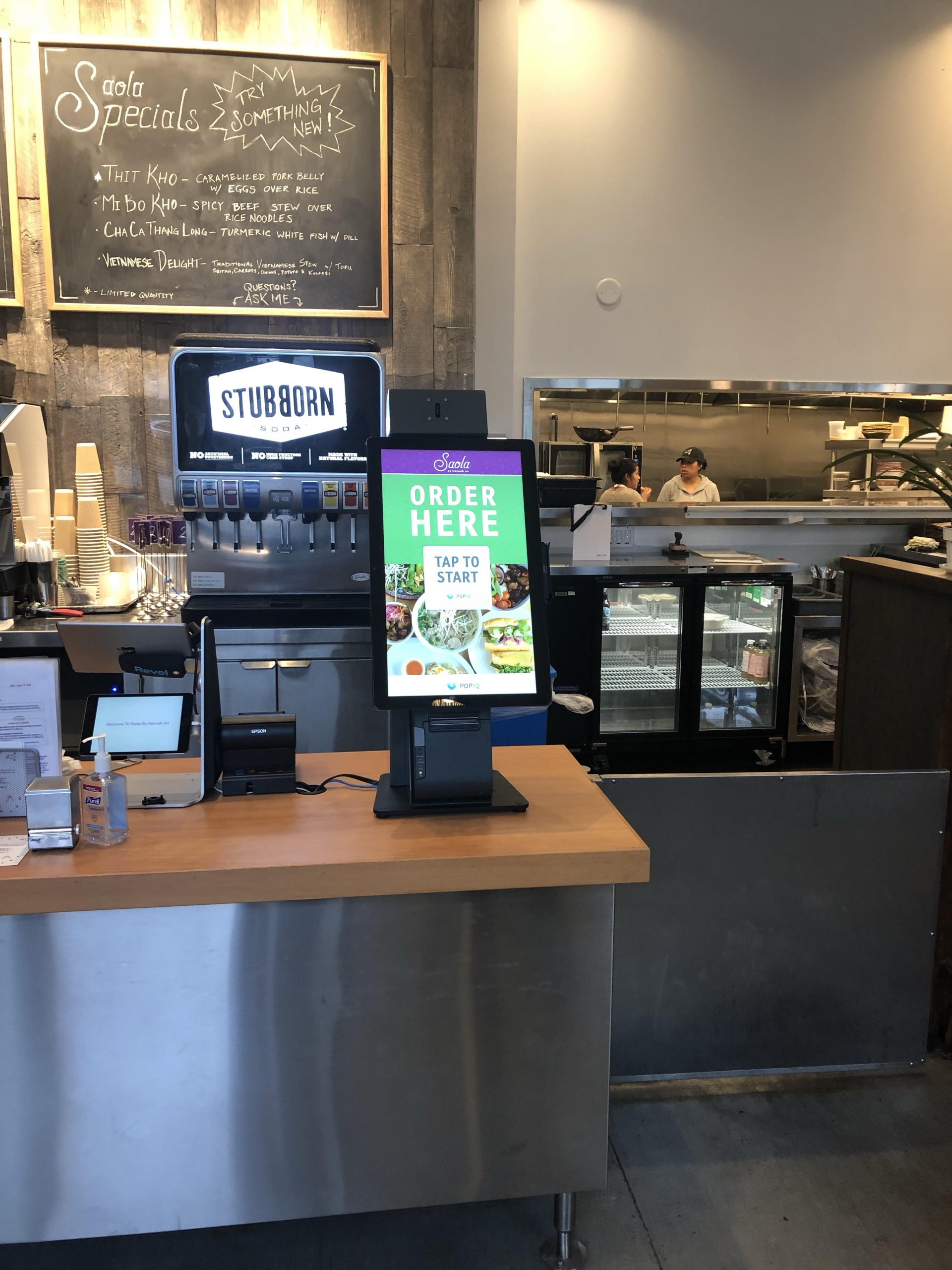
Quick service restaurants (QSRs), or fast food restaurants, are meant to provide consumers with a convenient, speedy food ordering process. With long in-store and drive-thru lines, however, this is not always the case. Add to that the time consumers spend trying to figure out how to use in-store kiosks, and this process become take even longer.
Luckily, the rapid development of new technology has prompted one software company, PopID, to create a unique solution that enables a seamless customer experience while reducing payment processing costs for QSRs. PopID’s solution comes in the form of an AI-enabled facial recognition platform that processes orders and payments at the click of a button.
To learn more about this solution, PaymentsJournal sat down with PopID’s CEO, John Miller, to learn more about how PopID’s solution improves the customer experience and reduces processing costs for participating QSRs.
An overview of PopID
PopID, founded in 2016, is a majority-owned subsidiary of Cali Group that aims to be the universal gateway for verifying consumers’ identities through facial recognition. It works closely with a number of QSRs to enable facial recognition as a type of payment.
PopID sprung up as a result of CaliGroup’s heavy investment in restaurant technology to address common pain points in CaliBurger, a CaliGroup-owned restaurant chain. CaliGroup realized that while in-store kiosks were supposed to be making things easier, consumers were actually taking much longer to type their whole orders into kiosks.
PopID’s payments solution
CaliGroup’s response to this problem was to implement facial recognition technology into the kiosks. Customers must opt in to use the service, which enables kiosks to remember customer’s previous orders — this works particularly well in QSRs, where consumers are inclined to order the same meal. The solution was a huge success for the CaliBurger consumers who opted in, substantially reducing lines and ordering time.
After implementing facial recognition into kiosks, PopID added payment processing to the solution. Once consumers started feeling comfortable with the system’s accuracy and effectiveness, PopID started to allow them to authenticate their card on file with a facial scan and pay through a wallet approach called “Pop Pay.”
“The world is getting ready for the ability to take facial recognition as a form of payment.”
John Miller, CEO of PopID
Another component of the solution is PopID’s integrations with payment terminal companies like Clover and Ingenico. Many newer payment terminals have hardware with embedded cameras, but this isn’t the case for older models. These integrations make it so these models can be adapted to work with PopID’s technology.
For example, Ingenico now makes a retrofit module with a camera that merchants can buy and plug in to existing terminals that don’t have cameras. “The world is getting ready for the ability to take facial recognition as a form of payment, so now is a great time to be doing these integrations,” noted Miller.
Facial recognition payments benefit consumers and merchants
As mentioned above, PopID’s AI-integrated kiosks speed up the customer experience by recognizing consumers and pulling up previous meals that they’re likely to re-order, thereby reducing ordering and wait times.
Beyond that, there is an AI engine in production that will make targeted recommendations based on similar menu items. This is similar to the way e-commerce platforms like Amazon have a “recommended for you” section for consumers based on previous orders and search history. In the future, PopID’s software will also have the ability to log and remember consumers’ food allergies.
Enhancing the consumer experience is a compelling reason on its own for QSRs to make the switch to facial recognition payments. Beyond that, though, merchants themselves benefit too. The pre-loaded wallet system works by allowing consumers to load their facial recognition “wallet” through a credit card that they swipe at the kiosk or online. This approach reduces the steep payment processing costs that would otherwise come with a card-not-present payment.
Bojangles’, Dairi-O, Plant Power, Deli Time, and several other small to medium restaurant chains have adopted PopID’s facial recognition platform since its release. Miller commented that while not yet public, “a few big national chains will be rolling out the solution in the future, which will really validate the technology.”
“If consumers are using the Pop Pay facial wallet for e-commerce orders, there will be a major reduction in the processing costs of that transaction.”
John Miller, CEO of PopID
Facial recognition will be compatible with mobile and drive thru payments
Many QSRs use third-party delivery services like Uber Eats, Grubhub, and Door Dash, and PopID will soon enter this realm. According to Miller, the company “has a clear plan to have that ‘Pop Pay’ button embedded onto websites and mobile apps. Again, the huge advantage for QSRs is that if consumers are using the Pop Pay facial wallet for e-commerce orders, there will be a major reduction in the processing costs of that transaction.” PopID hopes to have this feature available for e-commerce transactions by the end of 2020.
A drive-thru pilot launch is also coming soon, which makes sense given that drive-thrus already have cameras installed. The ability to order food and pay via facial recognition eliminates the hassle of having to hand an employee a payment method, followed by them running it and handing it back to you. This reduces labor costs for QSRs because an employee will no longer be needed to do that task.
Conclusion
Facial recognition as a payment method is gaining traction, with a total of over 700 million facial payment users anticipated globally in two to three years. Digital payments have been adopted slower in the United States than in other parts of the world, particularly Asia, as U.S. consumers tend to be more concerned about privacy within payment systems.
That said, consumers are finally starting to embrace digital payment avenues. It will be interesting to see the rate of adoption of facial recognition as a type of authentication and payment method. Expect this to become increasingly the norm as merchants and users adopt the method for its convenience and cost-reducing benefits.