

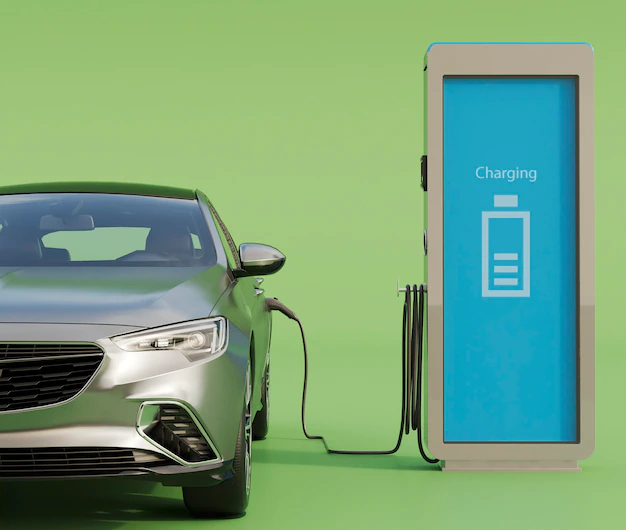
Mastercard is partnering with Last Mile Solutions to establish new payment standards for the electric vehicle (EV) charging industry across Europe. The plan is for a new methodology that allows charge point operators (CPOs) to integrate their existing EV charging stations with a variety of payment terminal brands, without requiring extensive integration efforts. Mastercard hopes the payment gateway solution will unify the user experience and simplify payment terminal integration, onboarding, and transaction processing.
Mastercard believes this effort will foster “the uptake of electric vehicles throughout Europe by eliminating existing barriers and simplifying the charging process for drivers with interoperable and universal payment solutions.” Last Mile Solutions is a Dutch-based EV charging and smart energy management platform provider.
A Separate Set of Standards
Why does the EV industry need its own payment protocols, separate from those used by traditional gas stations? Last summer, the European Parliament and the Council of the European Union adopted Regulation (EU) 2023/1804 on the deployment of alternative fuels infrastructure, commonly known as AFIR. One of AFIR’s primary objectives is to lay down mandatory minimum targets for a publicly accessible recharging and refueling infrastructure. The stated goal of the regulation is to alleviate the uneven distribution of publicly accessible recharging infrastructure across the EU.
In addition, many EV charging stations aren’t currently connected to an existing payments network. There are also various ways of charging different EVs, akin to the difference between diesel and unleaded, and the charging standards tend to be manufacturer-specific. That too has led to inconsistencies in payment processing.
“We’re converging on standardization, or at least interoperability, that will normalize the process,” said Christopher Miller, Lead Analyst of Emerging Payments at Javelin Strategy & Research. “But EV charging does enable some new applications since you are plugging an electric cable into the vehicle. The vehicle can be identified by the charging station through that connection.”
“In the long run that autopayment, triggered by the charging activity itself, will likely carry the most volume,” he said. “If this turns out to be true, then standardized charging interface and payment mechanisms are the direction things will go, and the individualized creation of ecosystems by brand or car will fade away.”
Heading for a Final Form
The Mastercard/Last Mile solution will be rolled out across Europe in early 2024. The AFIR regulations come into force this April.
“This announcement should be seen as one in a continuing series of efforts to make it easier to add more EV charging capability and reduce the friction of payments in compliance with various regulations worldwide,” Miller said. “A great deal of what is happening now is enabling activity that doesn’t represent the final form that EV charging payment will eventually take.”








