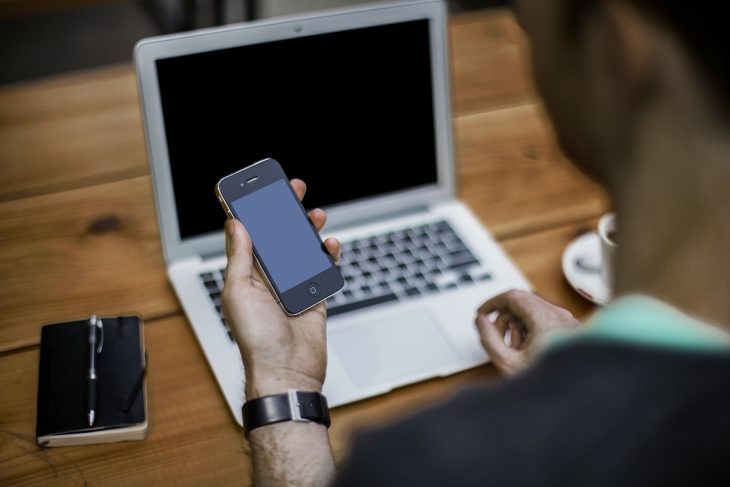
Instead of counting notes and coins or entering a PIN, smartphones have the potential to become a popular method of payment in Germany. Google Pay is already available in Germany, in theory, and Apple Pay plans to launch this year. But do the applications work and will Germans embrace mobile payments?
Roger Niederer, Head Merchant Services at SIX Payment Services, provides a much-needed reality check.
Check 1: How exactly do the systems work?
At present only Google Pay is available in Germany and exclusively for Android handsets. However, downloading the application from the app store is not enough to begin contactless shopping. Credit card data must also be stored within the app and for now, Google Pay only works with Comdirect-Visa, Commerzbank-Mastercard, Commerzbank-Visa and N26-Mastercard as well as the virtual credit card Boon. However, Landesbank Baden-Württemberg and Revolut have both recently announced their future intention to cooperate with Google Pay.
In addition to a pure payment function, Google Pay offers the ability to register loyalty cards within the app. Google does not charge any additional fees, but regular fees for credit card payments are applied. Which means the Google only makes indirect earnings on its payment facility.
Once credit card data has been deposited with Google the intention is that customers are likely to make additional purchases within their store – which is certainly the hope of the Internet giant. Apple, however, relies on its cooperation with banks and credit card providers, and Deutsche Bank has made clear its intention to participate with Apple.
Check 2: Is a credit card required to use these services?
Currently, the German EC-Card (debit card) does not fully support the security features used by Google. For example, tokenization which is a cryptographic process whereby instead of sensitive credit card information, random number series, so-called ‘tokens’ are transferred between customers and merchants. The validity of a token is checked by the payment system on an external server, therefore no salesperson will ever receive the actual credit card details of a customer. In the United States, Google Pay can be combined with numerous other payment systems, such as PayPal. For Apple, there are some indications that the payment app will only work with assigned credit cards.
Check 3: Where is the service available?
At present, the list of Google Pay partners in Germany is relatively small but includes big names such as Media Markt, Aldi and McDonald’s. Whether other companies will participate in the future will depend on the success of existing participants and the acceptance and adoption by customers. With regards to which retailers will cooperate with Apple Pay in the future, this is currently undisclosed.
Check 4: In a cash biased environment such as Germany, will Google and Apple Pay have a chance?
The Germans are known to have a strong and ingrained attachment to cash. In fact, more daily transactions are carried out in cash than in neighbouring European countries. However, this could be changing; there is growing adoption of electronic payments which is illustrated by the fact that between 2008 and 2017, the proportion of cash payments fell from 69 per cent to 44 per cent among 18-24 year olds – according to a study by the Deutsche Bundesbank. In fact, it is only with those aged over 65 where cash might retain its dominant position where according to 2017 statistics 58 per cent of this age group chose cash as their preferred method of payment.
The younger generation will undoubtedly embrace technological capabilities and opt to pay contactless with their smartphones. This is also likely to be the case with visitors to Germany and tourists who have long been used to these payment methods in their home countries.
Conclusion
Regardless of whether Google Pay and Apple Pay can fully establish themselves in Germany or whether other providers will dominate the market, it is clear that the world of payments will continue to evolve and improve. If German retailers do not want to fall by the wayside they must prepare today for the new technology-enabled landscape.
With the help of an experienced service provider, the integration of various cashless payment methods into their business model is easy. In order to deliver the smooth and integrated shopping experience that customers want, retailers cannot avoid automating their payment process. There is plenty of potential out there, not just with regards to smartphones, but also with networked devices that we interact with which can also be used as a means of payment and opens up the Internet of Payments.