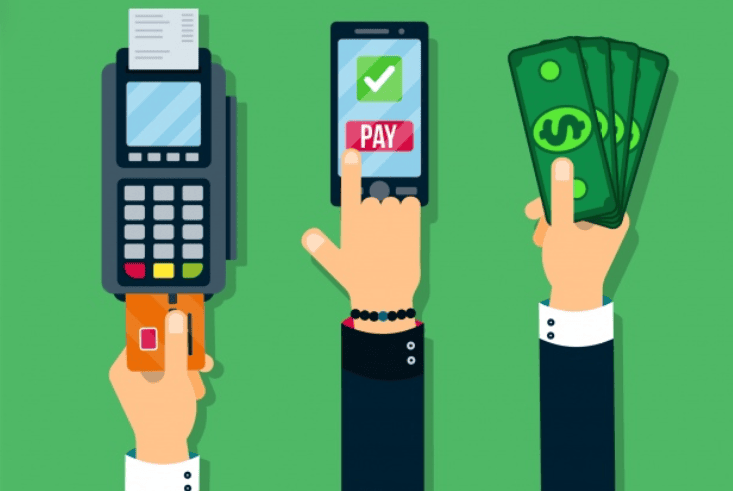
The pandemic has created many new, unforeseen challenges for people around the world. Most of the issues dominating headlines and our collective headspace existed well before the pandemic. But now, in a world that feels like it’s been turned upside down, they have been exacerbated. The debate around payments innovation and cashless societies is a prime example.
Many governments and companies have pushed to outlaw cash to help flatten the curve and drive innovation in payments. But this initiative, while seemingly progressive and the obviously safer thing to do, has many unintended and dangerous consequences for unbanked or underbanked consumers. Fintech, as an industry, has a responsibility to examine the way forward. Truly innovative solutions will include all shoppers, not divide them.
Innovation Can’t Leave Unbanked Shoppers Behind
The recent acceleration of digital payments has led to the high probability of a cashless society. But, is this where we see the holy grail in payments innovation? An entirely cashless society excludes unbanked and underbanked consumers, leaving them with little options on how to make transactions. This is unsettling for shoppers, and potentially even worse for merchants as according to PPRO data, 26% of global consumers lack access to a bank account. Cutting cash also eliminates over a quarter of the world’s customer base.
Rather, existing solutions must be leveraged to ensure unbanked shoppers have access to global e-commerce. This can include cash-voucher payment methods popular in LATAM like Oxxo, RapiPago or BoletoBancario, where 38% of consumers don’t have a bank account and 13% of online transactions are made with cash.
There are also smartphone-enabled payment methods to consider, those that do not require a bank account like Africa’s M-Pesa or Asia’s GrabPay. While the use of physical cash has recently declined for safety reasons, Fintech must offer cash-enabled digital methods that are not tied to bank accounts, so unbanked shoppers are still able to participate in our global economy.
Going Cashless Raises Privacy Concerns
A move away from cash can lead to privacy concerns for consumers. All transactions will now be under a microscope, removing any anonymity from the shopping process. Many consumers around the world already have a distrust in financial institutions and thus opt for cash over cards.
Such preferences are clear in many regions around the world, including LATAM, APAC and Africa due to historical cultural, political, and economic factors. These regions have lacked robust banking infrastructures and, thus, have leapfrogged legacy methods like credit cards in favor of innovative solutions tied to consumers’ needs, such as cash-vouchers or mobile-based methods that do not require a bank account. Instead of the need to open a bank account, simply having cash on hand or a smartphone is enough to participate in global e-commerce.
Consumers Depend on Payment Flexibility
At the end of the day, it is in the merchant’s best interest to offer a blend of different payment methods that adheres to the various needs of global shoppers. Payment flexibility is a must-have in offering a seamless checkout experience, as 42% of U.S. shoppers stop a purchase if their favorite payment method isn’t available.
Some shoppers never carry cash, while others view cash as the only way they want – or are able – to pay. Case in point, according to PPRO data, only 14% of APAC consumers have a credit card, but 51% have access to a smartphone. While only 50% of consumers in the Middle East/Africa are banked and cash is used in 23% of online transactions.
The ripple effects of a cashless society are clear, so we must look to strike the right balance between cash and digital payment methods to benefit the consumer.
Banning cash is a lose-lose situation for merchants and shoppers around the world. Instead, we must use innovation to create viable payment solutions for all.