PaymentsJournal
No Result
View All Result
SIGN UP
  • Commercial
  • Credit
  • Debit
  • Digital Assets & Crypto
  • Digital Banking
  • Emerging Payments
  • Fraud & Security
  • Merchant
  • Prepaid
PaymentsJournal
  • Commercial
  • Credit
  • Debit
  • Digital Assets & Crypto
  • Digital Banking
  • Emerging Payments
  • Fraud & Security
  • Merchant
  • Prepaid
No Result
View All Result
PaymentsJournal
No Result
View All Result

With Fraud Losses Topping $10 Billion, the FTC Fights Back

By Tom Nawrocki
February 14, 2024
in Analysts Coverage, Fraud & Security
0
0
SHARES
0
VIEWS
Share on FacebookShare on TwitterShare on LinkedIn
Identity Fraud, synthetic identity fraud

19th Identity Fraud Study Shows $52 Billion in Losses, 42 Million Americans Affected

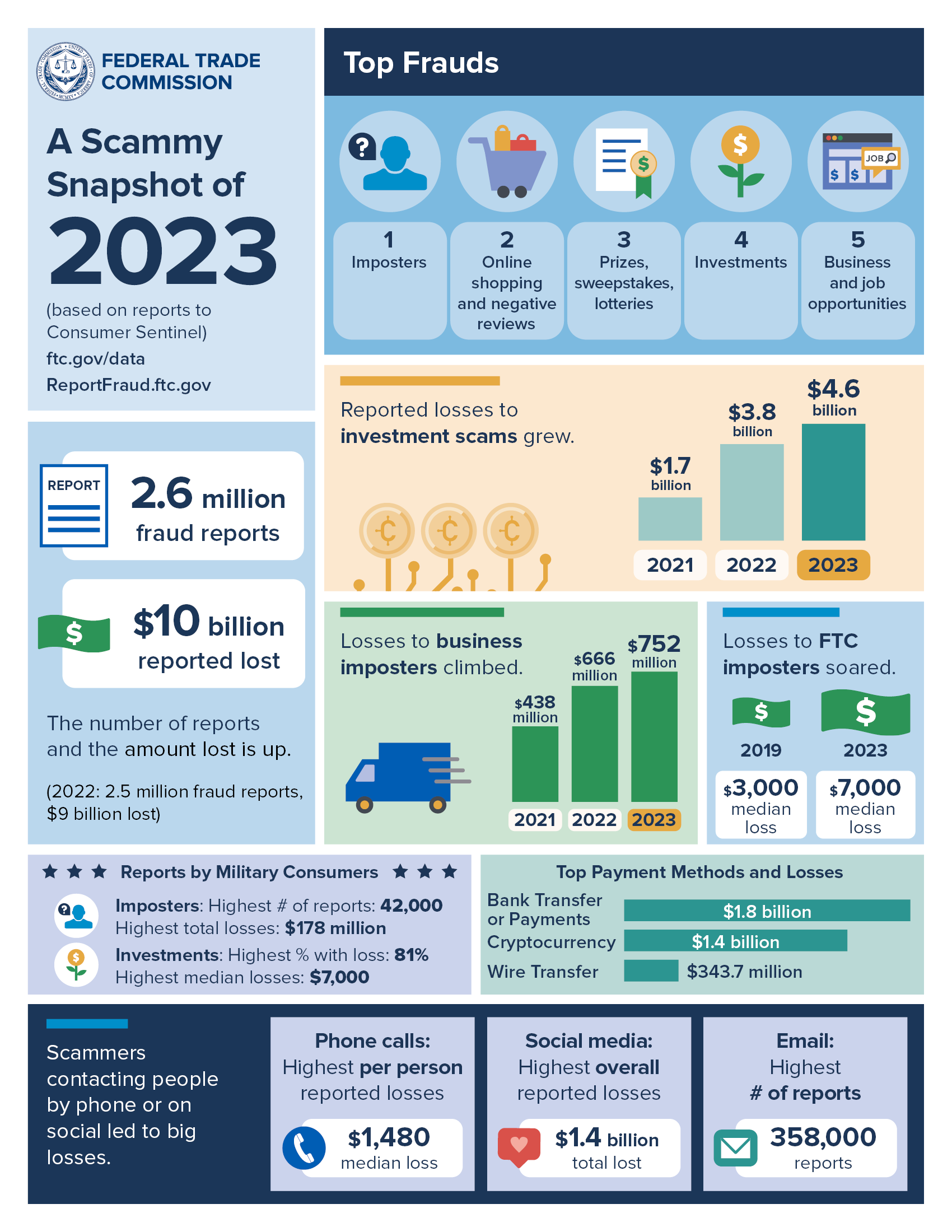
The Federal Trade Commission released data showing that consumers lost more than $10 billion to fraud in 2023. This represents a 14% increase from the previous year’s reported losses.

Consumers reported losing $4.6 billion to investment scams in 2023, the highest figure for any category. Individuals reported a median loss of $7,700 to investment-related frauds, an uptick from $5,000 in 2022. Imposter scams followed closely behind, with reported losses nearing $2.7 billion, making it the second-highest category in terms of financial impact.

Scammers continue to use bank transfers to pull off these crimes.Bank transfers and payments accounted for $1.86 billion in losses last year, the highest of any reported method. In second place was cryptocurrency, which accounted for $1.41 billion in reported losses.

Overall, the FTC received fraud reports from 2.6 million consumers last year, with imposter scams topping the list as the most frequently reported scam category. There were increases in reports of fraudsters impersonating both business and government officials. Online shopping issues ranked as the second most commonly reported type of fraud, followed by prizes, sweepstakes, and lotteries.

Another noticeable shift in 2023 was the ascendancy of email as the primary method used by fraudsters to target their victims, displacing text messages from its long-held position. Phone calls, which for decades dominated as the most reported contact method for fraud, trailed behind in second place, with text messages following closely behind.

Strategies for Fighting Fraud

With these facts in mind, the FTC is moving forward with several proposals designed to crack down on fraud. It is once again promoting a trade regulation rule, first suggested in 2022, that would prohibit the impersonation of government, businesses, or their officials. The commission is now soliciting “written comment, data, and arguments concerning the utility and scope of the proposed trade regulation rule to prohibit the impersonation of government, businesses, or their officials.”

The FTC also brought back an initiative from 2023 to help protect consumers from the misuse of artificial intelligence-enabled voice cloning for fraud and other harms. Last summer, it opened an investigation into whether OpenAI’s ChatGPT harmed consumers by putting their personal data at risk. The FTC sent a 20-page letter to OpenAI, asking the organization to address a variety of concerns, including the identification of third parties with access to its Large Language Models via API.  

0
SHARES
0
VIEWS
Share on FacebookShare on TwitterShare on LinkedIn
Tags: Fraud Risk and AnalyticsFTCImposter

    Get the Latest News and Insights Delivered Daily

    Subscribe to the PaymentsJournal Newsletter for exclusive insight and data from Javelin Strategy & Research analysts and industry professionals.

    Must Reads

    ACH Network, credit-push fraud, ACH payments growth

    What’s Driving the Rapid Growth in ACH Payments

    February 2, 2026
    chatgpt payments

    How Merchants Should Navigate the Rise of Agentic AI

    January 30, 2026
    fraud passkey

    Why the Future of Financial Fraud Prevention Is Passwordless

    January 29, 2026
    payments AI

    When Can Payments Trust AI?

    January 28, 2026
    Contactless Payment Acceptance Multiplies for Merchants: cashless payment, Disputed Transactions and Fraud, Merchant Bill of Rights

    How Merchants Can Tap Into Support from the World’s Largest Payments Ecosystem

    January 27, 2026
    digital banking

    Digital Transformation and the Challenge of Differentiation for FIs

    January 26, 2026
    real-time payments merchant

    Banks Without Invoicing Services Are Missing a Small Business Opportunity

    January 23, 2026
    card program

    Should Banks Compete in the Credit Builder Card Market?

    January 22, 2026

    Linkedin-in X-twitter
    • Commercial
    • Credit
    • Debit
    • Digital Assets & Crypto
    • Digital Banking
    • Commercial
    • Credit
    • Debit
    • Digital Assets & Crypto
    • Digital Banking
    • Emerging Payments
    • Fraud & Security
    • Merchant
    • Prepaid
    • Emerging Payments
    • Fraud & Security
    • Merchant
    • Prepaid
    • About Us
    • Advertise With Us
    • Sign Up for Our Newsletter
    • About Us
    • Advertise With Us
    • Sign Up for Our Newsletter

    ©2024 PaymentsJournal.com |  Terms of Use | Privacy Policy

    • Commercial Payments
    • Credit
    • Debit
    • Digital Assets & Crypto
    • Emerging Payments
    • Fraud & Security
    • Merchant
    • Prepaid
    No Result
    View All Result