OK, it probably can’t hurt, but the payments currently stillride on the debit rails! This articlepublished in the New York Times yesterday discusses Facebook’s announcementthat it has enabled users of its Messenger chat app to send money to otherpeople by linking their debit cards to the Messenger account and suggests newpayment solutions are on the horizon:
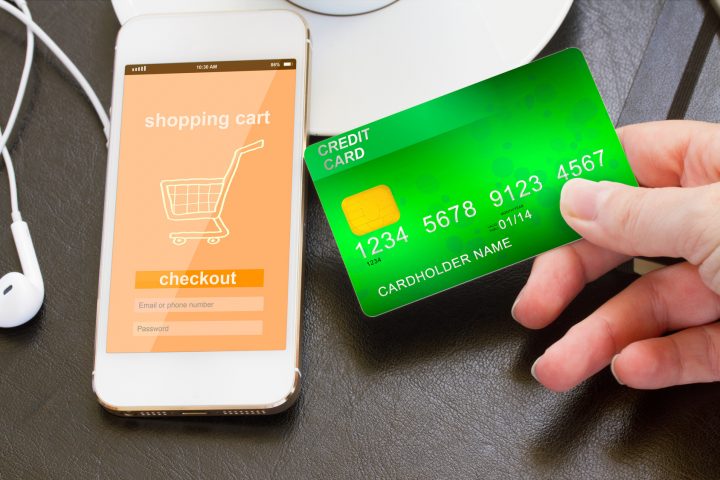
Facebook, the social networkingcompany, announced Tuesday that American users of its Messenger app would beable to link their debit cards to the service and use it to message money toone another just as easily as they send a snapshot or text.
Given Facebook’s huge size andreach, the introduction of its payments feature — which has been highlyanticipated by Wall Street — is likely to cause tremors in the nascent marketfor instantly sending money to individuals, known as peer-to-peer payments.
So one wonders how Facebook intends to cover the cost ofinterchange associated with each transaction, but as with Square and Venmo WallStreet apparently perceives profitability as a minor wrinkle. From a risk perspective, while Facebook mayhave been a target for hackers in the past, this move to capture user paymentcredentials will certainly raise its creds as a target. In one fell swoop hackers would have in-depthknowledge of not only the individual’s life but also the individual’s paymentcredentials. What could possibly gowrong?
Wall Street and others expect extensions of this productinto a generic “buy button,” that will compete with products from Visa,MasterCard, Amazon, and PayPal:
“Facebook could use this as aback door to get people’s debit cards to enable the buy button,” said RobertPeck, an Internet analyst with SunTrust Robinson Humphrey.
WeChat, which is essentially theFacebook of China, and other Asia-based communications services like Alipayalready allow their hundreds of millions of users to send money via instantmessage. But the technology is only beginning to appear in the United States,where email payment services like PayPal have long been more popular.
The company’s Messenger app is oneof the largest platforms in the world, with more than 500 million monthlyusers. And last year, Facebook spent nearly $22 billion to buy WhatsApp, aseparate messaging platform that now counts more than 700 million active usersglobally.”
But Facebook does have a plan to convert those unprofitabletransactions into a positive revenue stream and may be minimizing interchangecosts and increasing availability of funds by utilizing the networks new AccountFunding Transaction to pull funds from the funding account and the OriginalCredit Transaction to push funds into the recipient’s account:
Facebook wanted to keep the paymentand the conversation in one message thread that would also serve as a record.So right next to the thumbs-up button on the Messenger screen will be adollar-sign icon to send money. If a debit card number is already saved in theapp, you can send money to the other person in the conversation by clicking thedollar sign and entering an amount. The whole conversation will be saved forlater reference.
To reduce the risk of unauthorizedtransactions, Facebook said, users must enter a PIN or use Apple’s fingerprintidentification system before they can send the money.
By using debit cards to handle thetransfer, the money can move fairly quickly between the two bank accounts whileallowing Facebook to offer the service free to users.
Still, some merchants, particularlyoverseas, have been informally using Messenger to make transactions, Facebooksaid. The company has a payments business that brought in nearly $1 billionlast year, mostly for items purchased within games hosted on its platform. Ithas also been experimenting with an e-commerce system that allows merchants tolist items for sale and collect money for purchases directly on the socialnetwork.
Using the Original Credit Transaction minimizes costs toFacebook for P2P transactions (currently about 10 cents per transaction), butwhen Facebook enables users to purchase items from a broad range of merchantsthe company will need to become an acquirer, a much more complex and expensivebusiness model as David Marcus knows.
Overview by Tim Sloane, VP, Payments Innovation for Mercator Advisory Group
Read full story at the New York Times