Remote deposit capture transformed how consumers deposit checks, making it possible to snap a photo with a smartphone and complete a deposit without visiting a bank branch. As the technology became a standard feature across the banking industry, questions over the intellectual property behind these innovations grew increasingly important.
A long-running patent dispute between USAA and Wells Fargo highlighted the value of remote deposit capture technology and the legal battles that can arise when financial institutions adopt pioneering digital banking capabilities. The outcome could influence future licensing agreements across the industry.
You may have seen the headlines last week that USAA won a court battle that requires Wells Fargo to pay the company $200 million, should the judgement stand. The dispute is over remote deposit capture; the ability to send a picture of a check and have that image of a check deposited to an account.
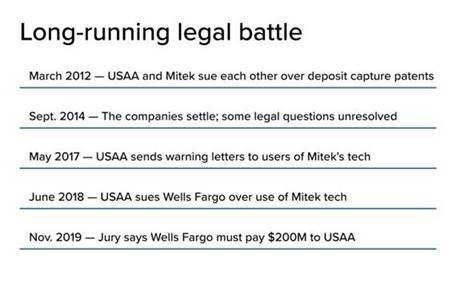
USAA says that it owns the right to the technology which Wells Fargo has been using without paying royalties. An article in the American Banker highlighted the key events in this nearly eight-year-old case:
Be looking for more of this activity soon:
USAA said in a statement that it “continues to seek opportunities to create reasonable and mutually beneficial licensing agreements with banks and credit unions.””We hope the industry acknowledges this verdict as further evidence of the enforceability of these patents,” said Nathan McKinley, vice president of corporate development at USAA. “Our goal is to be reasonably compensated for the benefits we believe the industry has received from using USAA’s pioneering efforts.”
While additional entanglements exist with this battle, including an appeal by Wells Fargo, USAA will likely want to take this “win” and apply it to other banks, before check volumes decline much further.
As check usage gradually declines, remote deposit capture remains an essential digital banking service for consumers and financial institutions alike. The USAA-Wells Fargo dispute underscores how valuable foundational banking technologies can be, even as payment habits continue to evolve.
The case also serves as a reminder that innovation in financial services extends beyond new payment methods—intellectual property surrounding digital banking tools can shape competitive dynamics and influence future technology adoption across the industry.
Overview by Sarah Grotta, Director, Debit and Alternative Products Advisory Service at Mercator Advisory Group