
PaymentsJournal
No Result
View All Result
SIGN UP
  • Commercial
  • Credit
  • Debit
  • Digital Assets & Crypto
  • Digital Banking
  • Emerging Payments
  • Fraud & Security
  • Merchant
  • Prepaid
PaymentsJournal
  • Commercial
  • Credit
  • Debit
  • Digital Assets & Crypto
  • Digital Banking
  • Emerging Payments
  • Fraud & Security
  • Merchant
  • Prepaid
No Result
View All Result
PaymentsJournal
No Result
View All Result

AI Can Detect an Increasingly Large Number of Behaviors and Motivations

By Tim Sloane
June 28, 2021
in Analysts Coverage, Artificial Intelligence, Biometrics, Emerging Payments, Fraud & Security, Fraud Risk and Analytics
0
0
SHARES
0
VIEWS
Share on FacebookShare on TwitterShare on LinkedIn
AI Can Detect an Increasingly Large Number of Behaviors and Motivations -

AI Can Detect an Increasingly Large Number of Behaviors and Motivations

First, you were identified by how you held your phone, typed, and moved the mouse. Then you were recognized by how you browsed and transacted on the website.

AI models have now been tuned to recognize customer coercion. It doesn’t stop there: AI can detect behavior that suggests older adult account abuse, individuals that are mules for criminals, and a range of other previously impossible to detect financial crimes:

“Every swipe tells a story

This is where the power of behavioural biometrics comes into play. Even though it is a genuine user making the payment, when a person is acting under the influence of a cybercriminal, there are subtle changes in digital behaviour that are statistically significant enough to suggest a social engineering scam may be at play. Some of the behavioural insights obtained from the data collected can help build a picture of a user’s emotions during a session. Figure 1 below summarises a few of the behaviours victims of social engineering scams can exhibit during a session and how these can be interpreted.
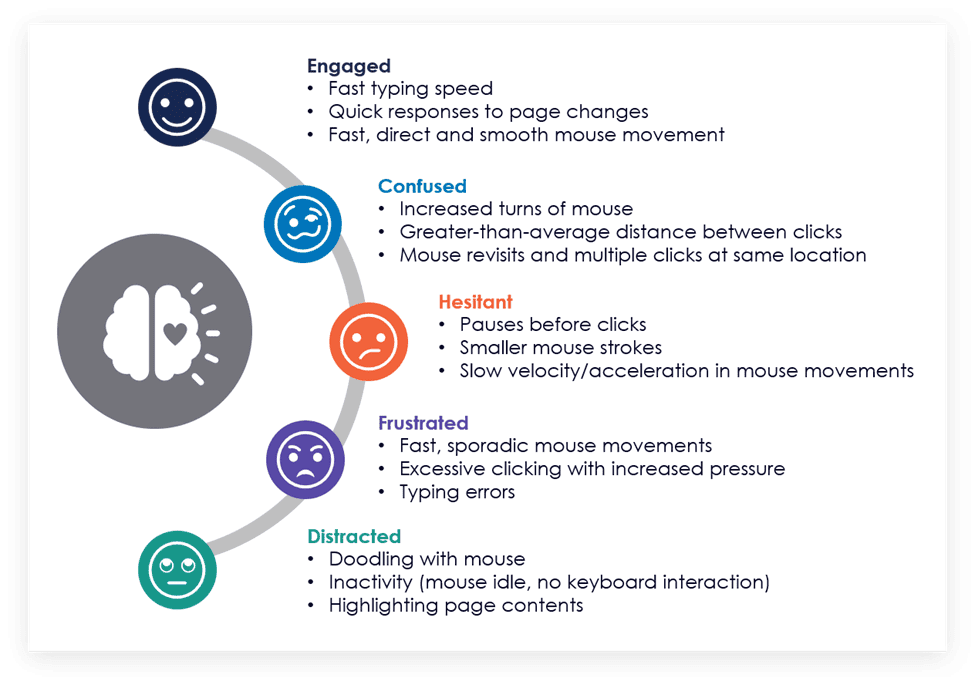
Source: BioCatch

        Figure 1: Digital behaviours that indicate a social engineering scam may be occurring in real timeEach individual behaviour on its own does not imply social engineering, but when combined with hundreds of other data points and compared against the norms of the genuine population, these insights have the potential to paint a disturbing picture. Consider something as simple as a customer who is on an active phone call while navigating a live session in a mobile banking app. Analysing the values for this one indicator, there is a significant difference between the genuine and fraud population:

•            Less than 1% of all Android users multitask, combining a phone call with mobile banking activity;

•            More than 1 in 4 confirmed cases of fraud show that the victim was on an active phone call;

•            Data shows that an active call is 30 times more prevalent in the fraud population than the genuine population. 

When considering these differences, an active call during a live banking session can be used with other data points as a strong indicator of social engineering.”

Overview by Tim Sloane, VP, Payments Innovation at Mercator Advisory Group

0
SHARES
0
VIEWS
Share on FacebookShare on TwitterShare on LinkedIn
Tags: Artificial IntelligenceBehavioral BiometricsBioCatchFacial RecognitionFraud Prevention

    Get the Latest News and Insights Delivered Daily

    Subscribe to the PaymentsJournal Newsletter for exclusive insight and data from Javelin Strategy & Research analysts and industry professionals.

    Must Reads

    bank chatbot

    When It Comes to Chatbots, Banks Are Falling Behind Fintechs

    February 20, 2026
    embedded payments finance

    How Developers Are Driving the Future of Embedded Payments

    February 19, 2026
    gift card strategy

    The Gift Card Shift: From Convenience to Core Shopping Strategy

    February 18, 2026
    Tina Shirley

    From Cross-Border Payments to Community Banks: The Future of Zelle®

    February 17, 2026
    Startups: Fintechs Data Streaming Technology in Banking, corporates Enriched Data vs Faster Payments

    Fighting Fraud in the Era of Faster Payments

    February 13, 2026
    cross-border payments

    Solving for Fraud in Cross-Border Payments Requires Better Counterparty Verification

    February 12, 2026
    agentic commerce

    Demystifying the Agentic Commerce Enigma

    February 11, 2026
    payment gateways

    How Payment Gateways for Businesses Can Help You Offer Your Customers More Options

    February 10, 2026

    Linkedin-in X-twitter
    • Commercial
    • Credit
    • Debit
    • Digital Assets & Crypto
    • Digital Banking
    • Commercial
    • Credit
    • Debit
    • Digital Assets & Crypto
    • Digital Banking
    • Emerging Payments
    • Fraud & Security
    • Merchant
    • Prepaid
    • Emerging Payments
    • Fraud & Security
    • Merchant
    • Prepaid
    • About Us
    • Advertise With Us
    • Sign Up for Our Newsletter
    • About Us
    • Advertise With Us
    • Sign Up for Our Newsletter

    ©2024 PaymentsJournal.com |  Terms of Use | Privacy Policy

    • Commercial Payments
    • Credit
    • Debit
    • Digital Assets & Crypto
    • Emerging Payments
    • Fraud & Security
    • Merchant
    • Prepaid
    No Result
    View All Result