We never notice how much we all travel until we all stop. It used to be that the only way to experience this was to take a walk in a city center on New Year’s Day. The silence and the stillness, the absence of people hurrying through the streets, buses rumbling along their routes, passengers emerging from subways, showed just how important travel is for animating cities. Without travel networks and the travellers, they enable, cities are just a lot of buildings huddling together against the cold.
The pandemic turned every day into New Year’s Day – for month after month. In many cities, the streets fell completely silent. Public-transport networks ran skeleton services to take essential workers to and from their jobs, and the sight of empty buses dutifully waiting at empty bus stops for passengers who never came was an eerie reminder of just how strange life had become.
As pandemic restrictions lift, we are travelling again. Although working from home has been a challenge for many, a lot of work is still getting done. People are questioning the need for, and the environmental impact of, the daily commute. Must we travel to an office to work on a laptop, answer calls and email, take part in online meetings? No. Should we go to the office for face-to-face discussions, group problem-solving, and ideation? Definitely. And so, people are travelling again, but in different ways. They’re walking further, renting e-bikes and e-scooters as a substitute for short bus and subway trips, and incorporating other forms of transport where they can.
Public transport authorities (PTAs) and operators (PTOs) know that to rebuild their ridership, they need to make it as easy as possible for passengers to travel in this multimodal way, helping them to shift from bike to bus to tram to boat and back again without thinking. Anything that slows them down just delays the moment at which public confidence is restored and ridership numbers return to normal.
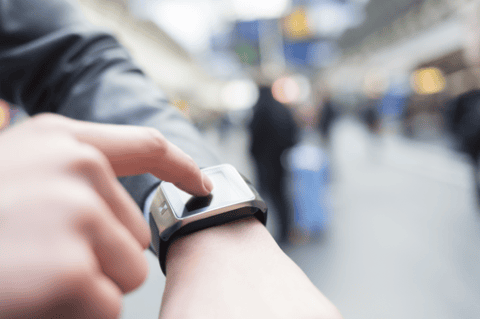
One of the most effective things that PTOs and PTAs can do to help is to make paying for travel simple. They can do this by creating or supporting a single, well secured, sustainable ticketing system that enables travel on as many different services as possible in their region, and which is flexible enough to support innovative pricing strategies such as zoning, time-of-day discounts and easy transitions between travel modes. The tickets should also work on any platform, be it a dedicated travel-card, smart watch, phone or future wearable device. And given the pandemic, it is essential that future ticketing solutions are entirely touchless.
The pandemic has also taught PTOs and PTAs that they need more control over their transport systems, and the data that is generated about how they are used. Some PTOs and PTAs have been unable to quickly adjust their travel offerings to the reality of the pandemic, because their systems are run by third parties under inflexible outsourcing contracts that use proprietary solutions. Others have found that the data their services generate, such as ridership statistics, is not as easily available to them as they would like because it is not being processed inhouse. Openness, flexibility and control are the new watchwords of post-pandemic travel ticketing.
This kind of ticket, which supports many different modes of transport (e.g. scooter, train, tram) and can exist on many different hardware platforms (e.g. smartcards, mobile phones, wearable devices) at once is desirable but challenging to achieve. There are several issues that must be overcome to make it possible.
The first is matching the cost of the solution to the revenue it is gathering and protecting. Implementing the most secure digital ticket possible, and the highly secure infrastructure needed to support it, won’t make financial sense if it only enables $1 journeys. Fortunately, a variety of ticketing solutions are available to enable PTOs and PTAs to match ticketing costs to the revenue they generate.
The second issue is enabling multiplatform operation, so that a ticket can be read on multiple devices during a journey. This enables users to choose the hardware platform they prefer for ticketing. It would also allow users to buy a ticket on a mobile phone while still in the office, and then use a smartcard, registered to the same account, while they travel in order to protect the phone from damage or loss.
The third issue is sustainability, which in ticketing terms means allowing that the underlying IT infrastructure is designed to last for 15 to 30 years, even if the ticketing terminals only last for ten and the ticket-bearing devices for five. This demands a forward-thinking approach to the IT architecture, the use of open standards to ease interoperability, rigorous attention to the ownership of, and access to, data flows, and as much transparency as possible in the design.
And the fourth challenge is simply to make all this happen, and to make it possible to migrate from legacy systems to new forms of ticketing without service interruptions.

The good news is that the ticketing industry understands that developing and completing open standards, and undertaking further standardization of the infrastructure and guidelines for ticketing solutions, enables greater interoperability and avoids supplier lock-in. The industry also knows that when it specifies a major piece of infrastructure, such as a ticketing terminal, it should support current standards, and is designed to support future open standards as well. Some call this approach ‘adversarial interoperability’, for its ability to rebalance the relationship between customer and supplier.
Acceptance of the EMV standard for ticketing payments is another way to attract new ridership groups in transportation. EMV is now being increasingly used to enable ‘open loop’ payments in which a passenger taps their card on an NFC reader at the start of a journey to pay for a journey.
As is often the case where a market would grow more quickly if there was greater collaboration, two standards bodies have emerged to promote open ticketing arrangements and avoid market fragmentation. The OSPT Alliance (for Open Standard for Public Transport) promotes CIPURSE as an open platform for transport ticketing, built on top of several ISO-standard enabling technologies. CIPURSE is media independent but supports contactless cards, mobile phones and wearables. This makes it easy to adopt now and to support new ticketing hardware as it becomes available.
The second standards body is the Calypso Networks Association, which promotes an open, efficiently secured ticketing standard already in use in more than 25 countries and more than 170 cities globally. It has been designed by transport operators with openness and longevity in mind.
The OSPT Alliance and the Calypso Networks Association are now collaborating to drive global adoption of open standards in transport ticketing, and plan to converge the CIPURSE and Calypso standards. This should provide greater openness, simplify the integration options for transport operators, harmonize technical specifications, and encourage operators to innovate in ways that add more value than is possible through ticketing arrangements.
Travel in the post-pandemic world must be made easy if ridership is to return to pre-pandemic levels. Consumers want mobility as a service in which a single account, managed through one app and implemented on multiple types of hardware, from smart cards to wearables, enables seamless travel from door to door, across the largest possible region, using any type of transport. Infineon has many of the building blocks to make this possible and highly secure, experience with the key open standards, and a track record of helping PTOs and PTAs implement ticketing systems that are evolving towards this ideal. The rest of the journey is up to you.