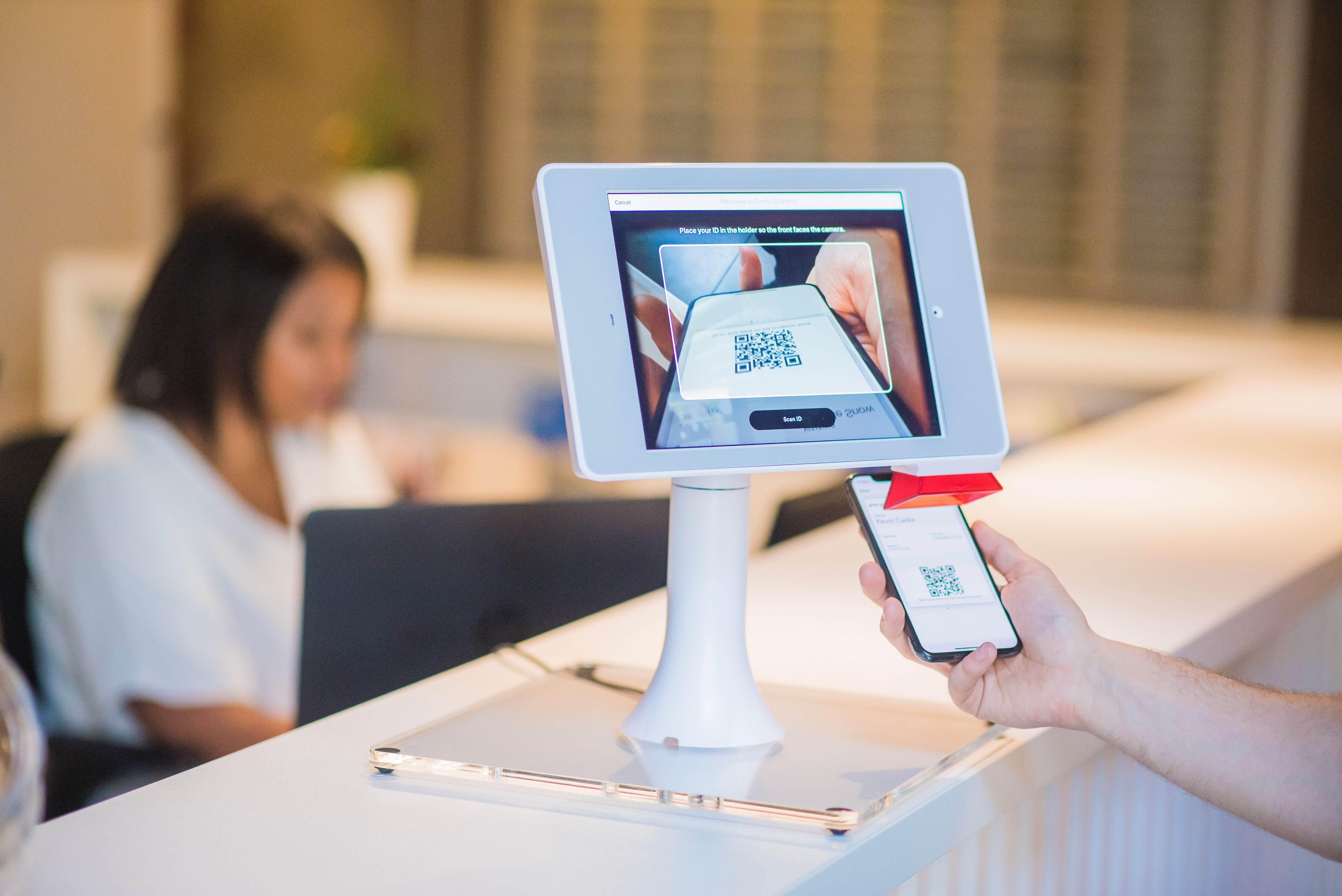
Smart Brief quotes eMarketer regarding e-commerce sales in China surging 7.5 % this year, surpassing $5 trillion (and US e-commerce), suggesting that QR codes on WeChat Pay and Alibaba are driving sales with QR codes, but it is social media that is behind the volume.
- China is a mobile-first internet market that developed later than its global peers; people went straight to purchasing cheap smartphones and skipped desktop computers, which many couldn’t afford.
- QR codes are everywhere in China. In every retail shop, convenience store, and restaurant, you can use QR codes to pay with pervasive mobile payment apps WeChat Pay or Alipay. At the register, all you need to do is scan the QR code with your WeChat Pay or Alipay app, enter a six-digit pin code, and the money is withdrawn from your bank account. No need to swipe your credit card or sign a receipt.
- The security of QR code technology made it possible for people to pay random strangers and small businesses. QR codes are much cheaper for small businesses than the near-field communication (NFC) credit card terminals that US merchants use. It’s because of these small merchants that WeChat Pay and Alipay adopted QR codes.
QR codes make it easy, with low-budget cell phones (read $60 or more), but it is social commerce that is driving low-cost engagement.
- As a result, brands in China have turned to social commerce to help them acquire new customers. Instead of using ads to reach and engage new users, they leverage their current base of customers to market their products for them by creating alluring content and incentives to share with friends or family.
- One example is group-buying social commerce. Chinese marketplace platform Pinduoduo is a marketplace of third-party sellers, similar to Alibaba’s Taobao platform. Pinduoduo provided steep discounts for current customers to pull in friends and family on group-buying deals. The reasoning was that the discounts were still lower than the marketing costs needed to acquire new customers through ads.’
- This Groupon-like strategy wouldn’t have been successful if it weren’t for popular social media platform WeChat, as its billion-plus user base and Pinduoduo group-buying mini-program made it easy for existing users to share promotions with new users across their social networks. Through this tactic, Pinduoduo was able to scale to over 300 million registered users within just three years, enabling it to go public in New York just last year.
- Another example is content-driven social commerce. China’s Xiaohongshu, or Little Red Book, platform is the most prominent example, as a standalone app with over 100 million registered users. Its photo-centric layout is similar to Pinterest’s platform, with products and locations tagged and commentary written below.
The takeaway is this. QR codes lay the groundwork for cheap merchant enablement, but the driving force in Asia is the social content. QR codes allow merchants and consumers to interact without the traditional point of sale equipment; they can do it on low-budget Android phones. Social commerce, the rating of goods and experiences fuels the volume, and as Jing Daily points out, there is a process that flows from social inspiration to research, purchase, and sharing which bring the merchant and consumer together, where the QR-based transaction can occur.
Overview by Brian Riley, Director, Credit Advisory Service at Mercator Advisory Group