PaymentsJournal
No Result
View All Result
SIGN UP
  • Commercial
  • Credit
  • Debit
  • Digital Assets & Crypto
  • Digital Banking
  • Emerging Payments
  • Fraud & Security
  • Merchant
  • Prepaid
PaymentsJournal
  • Commercial
  • Credit
  • Debit
  • Digital Assets & Crypto
  • Digital Banking
  • Emerging Payments
  • Fraud & Security
  • Merchant
  • Prepaid
No Result
View All Result
PaymentsJournal
No Result
View All Result

Grifters Put the Bullseye on Young Adults

By Peter Reville
March 10, 2020
in Analysts Coverage, Fraud & Security, Fraud Risk and Analytics
0
2
SHARES
0
VIEWS
Share on LinkedIn

The days of the email from a “foreign prince” asking for money are no longer upon us, but scammers are still concocting ways to remove money from people. New data indicates that the fraud target is trending away from the elderly to younger adults.

The Australian Competition and Consumer Commission has released data that confirms what the Federal Trade Commission here in the U.S. already announced: scammers have shifted their focus to Gen Z.

According to a recent article in the Courier News out of Australia:

Fake online stores, dodgy ticket sales, sextortion rackets, and Fortnite rorts are among an expanding suite of strategies used by scammers to target Gen Z Australians. The ACCC says Australians under 25 lost more than $5 million to scams in 2019, with reports made from this age group increasing faster than older generations.

About 12,000 of the reports made to Scamwatch in 2019 were from people under the age of 25, an increase of 11 per cent compared to 2018 figures. Reports from this age group increased by 10 percentage points more than any other age group.

Online shopping scams were the most common scams, making up more than 14 per cent of reports and almost 12 per cent of losses among people under 25.

It appears that this issue is not limited to just Australia and the U.S. Our data suggests that Canadian young adults are also more likely to be victims of fraud.
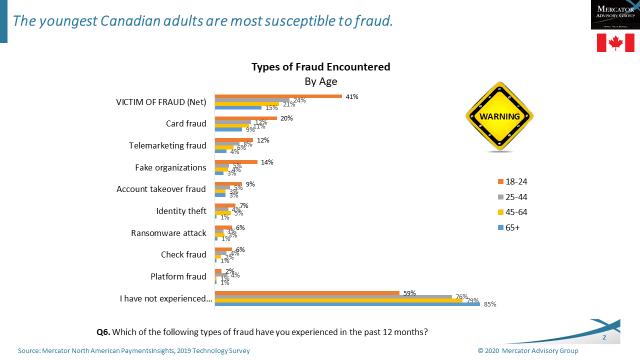
To the grifters, Gen-Z consumers are ripe for the picking for a few reasons:

  • They are the digerati and grew up with a connected smartphone in their hand and, as such, are more trusting of the digital world,
  • They tend to be heavy users of social media – it’s like shooting fish in a barrel for scammers,
  • They tend to have a greater feeling of invincibility, believing that nothing can happen to them.
  • They may not be as aware of the different ways they are vulnerable.

I’m sure, given more time, I could come up with more reasons, but this list is sufficient to get my point across.

Scammers will always find the path of least resistance when it comes to their craft. At this point, it looks like the foreign prince grift has run its course and now the crooks have chosen to look elsewhere to do their evil deeds. 

Perhaps your good deed of the day could be to let some Gen-Zers know they should be wary.  Whether they listen to you, is up to them.

Overview by Peter Reville, Director, Primary Research Services at Mercator Advisory Group

2
SHARES
0
VIEWS
Share on LinkedIn
Tags: AustraliaDigitalFraudFraud Risk and AnalyticsFTCGeneration ZUnited States

    Get the Latest News and Insights Delivered Daily

    Subscribe to the PaymentsJournal Newsletter for exclusive insight and data from Javelin Strategy & Research analysts and industry professionals.

    Must Reads

    api metrics

    How API Metrics Can Inform Better Business Decisions

    November 18, 2026
    real-time payments, instant payments, small business cash flow management

    How Financial Institutions Can Connect the Dots for Small Business Customers

    November 17, 2026
    private label card modernization

    The Biggest Risk for Private Label Card Programs Isn’t Competition—It’s Stagnation

    November 16, 2026
    Secured Credit Cards, Biometrics Integration Smart Cards, digital banking transformation, digital card adoption

    Turning Digital Banking Into a Lending Opportunity

    November 13, 2026
    ai synthetic identity fraud

    Identity Crisis: The AI-Powered Rise of Synthetic Identity Fraud

    November 12, 2026
    first-party fraud prevention

    How Automation Is Changing the Fight Against First-Party Fraud

    November 11, 2026
    agentic payments governance

    From Know Your Agent to Govern Your Agent: Building the Control Layer for B2B Agentic Payments

    November 10, 2026
    merchant management APIs

    How Merchant Management APIs Are Streamlining Operations

    November 9, 2026

    Linkedin-in X-twitter
    • Commercial
    • Credit
    • Debit
    • Digital Assets & Crypto
    • Digital Banking
    • Commercial
    • Credit
    • Debit
    • Digital Assets & Crypto
    • Digital Banking
    • Emerging Payments
    • Fraud & Security
    • Merchant
    • Prepaid
    • Emerging Payments
    • Fraud & Security
    • Merchant
    • Prepaid
    • About Us
    • Advertise With Us
    • Sign Up for Our Newsletter
    • About Us
    • Advertise With Us
    • Sign Up for Our Newsletter

    ©2026 PaymentsJournal.com |  Terms of Use | Privacy Policy

    • Commercial Payments
    • Credit
    • Debit
    • Digital Assets & Crypto
    • Emerging Payments
    • Fraud & Security
    • Merchant
    • Prepaid
    No Result
    View All Result