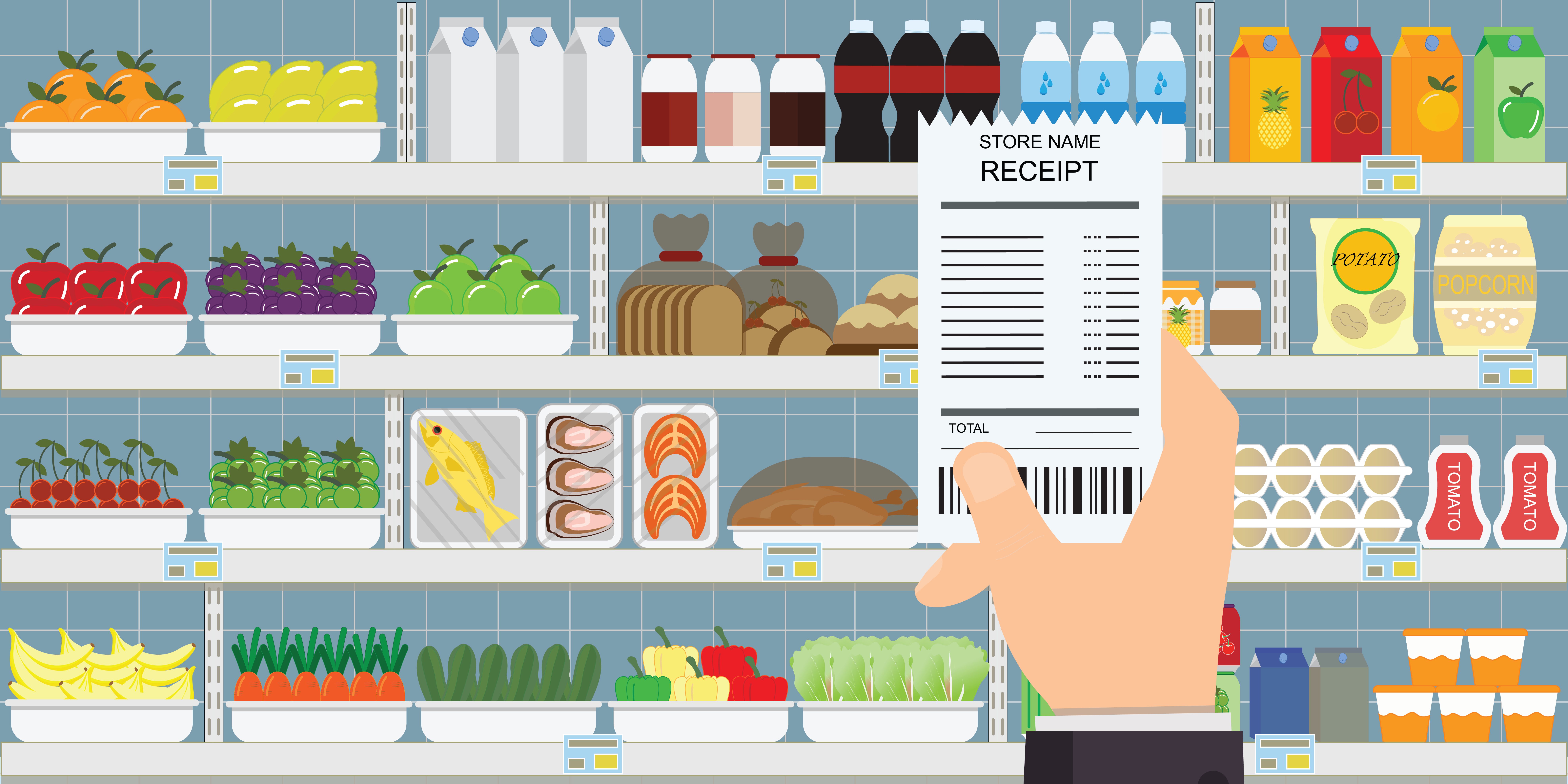
Most merchants take an analytical approach to their store layouts, positioning items in both in-person and digital environments for strategic advantage. Could these same strategies—using the retailer’s ubiquitous planogram—also be applied to payment processes?
A report from Javelin Strategy & Research, Merchants Should Planogram Payments, draws a parallel between the shopping experience and the payment experience. As author Don Apgar, Javelin’s Director of Merchant Payments explains, the same lessons learned from designing a store layout or website can be used to make payment options more efficient and effective for customers.
The Logic of the Planogram
For those unfamiliar, a planogram is a diagram retailers use to determine what products they’re going to stock and how those products will be displayed. The underlying principle is that no store has unlimited space—and even if it did, no customer would want to navigate a store carrying every product ever made.
As a result, decisions about what to stock, how much of each item to carry, and how products should be presented become critically important. The most popular items get the most space, but stores also need to offer a mix of brands, flavors, and sizes. Sales data informs how shelf space is allocated: retailers must avoid running out of top-selling products while also minimizing inventory devoted to items that consumers rarely buy.
“It’s a balance,” said Apgar. “If you only stock the hot sellers, you’re not going to draw a lot of customers, because customers want choice. At the same time, merchants don’t make money by putting stuff on shelves. They make money by selling the stuff that’s on the shelves.”
Strategic Shopping
Merchants have been using planograms for decades, dating back to when they were pioneered by Kmart in the 1970s. For example, retailers analyze all the sales data for Coca-Cola to answer questions like: Was the two-liter size the most popular? How many did we sell? How many do we realistically need to keep on the shelves? If the Coke representative comes every 10 days, what does a 10-day supply of two-liter bottles look like, and how much shelf space does that require?
The same principle applies at stores like Walmart or Target. A sweatshirt may come in eight colors, but chances are a shopper will find only three or four colors on the shelves, along with a limited size run—perhaps a couple of smalls, some mediums and larges, and maybe two or three XLs.
This similar logic extends to e-commerce. On most retail websites, the menu and navigation structure roughly mirror how products are organized and merchandised in a physical store.
“The old example is when you go to a grocery store, the milk is always in the back,” said Apgar. “In most stores you have to walk down the candy aisle or the cookie aisle or the chip aisle to get there. The planogram of how stuff is on the shelves roughly correlates to how products are placed on the page, because most websites may show you only 20 products. The order they’re showing you the products in is not random.”
Would It Work in Payments?
The old way of thinking was that no matter how a customer wanted to pay, the merchant should accept it. Today, however, there are so many variations of payment types that the industry has entered the era of payments orchestration. But, as with the sweatshirt example, it doesn’t make sense for every merchant to offer every form of payment.
“The guys that are selling orchestration will say, if you add another connection to Chase, you can boost your approval rate on Chase cards by two percentage points,” said Apgar. “But that’s just looking at accepting the transaction and switching it over to Chase for an authorization. If you have to have a business relationship with Chase, you’re getting a statement from them, plus chargebacks and disputes.
“Now you’re going to deal with three processors because that’s how many you need to optimize the performance of the front end for authorization and response time, and you’ve got to figure out the cost of dealing with three guys on the back end.”
Even if a merchant can raise its authorization rate by two percentage points by adding another connection, it still has to weigh the business resources required to manage that relationship—such as IT and development effort, as well as customer service. When a dispute arises, the merchant must also determine which processor it came from. Different processors have different rules for handling disputes, and that complexity can escalate very quickly.
A Familiar Concept
A planogram is very familiar to anyone who works in retail, meaning that while it represents a new way of looking at payments, it’s also fully understandable. In the tried and true planogram method of allocating warehouse space for e-commerce or store space for retail, that same strategy applies to payments.
“Saying let’s orchestrate payments to make sure that that every single customer gets the the best experience, that’s like saying, we need to stock every single size and style of sweatshirt to make sure that no customer leaves disappointed,” said Apgar. “You have to apply that same critical thinking to payments and say, this isn’t an unlimited budget, where I’m going to throw money at this and create this complex payments engine. What are the critical parts of my payment strategy? Where do I invest money? How do I know if it’s worth the additional back-office expense to add another service provider to increase approval rates on certain types of cards?”
The Key to Understanding Costs
The payments planogram aims to satisfy the maximum number of customers while managing the cost basis. It doesn’t make sense to add a process that is used so infrequently that it fails to deliver enough value to the organization relative to the cost of maintaining it.
“If you make the decision to put something on the shelf that’s a slow seller, at least understand what the cost of doing that is,” said Apgar. “It’s the same thing with payments. If you decide to support a payment process that only helps a few customers, it’s costing you money. Just like you use the sales data to support the planogram, you use that same data to support or measure the costs of your payment infrastructure, so you can apply that same logic.
“If it’s making you money, you should know how much. If it’s not making you money, you should also know how much.”