

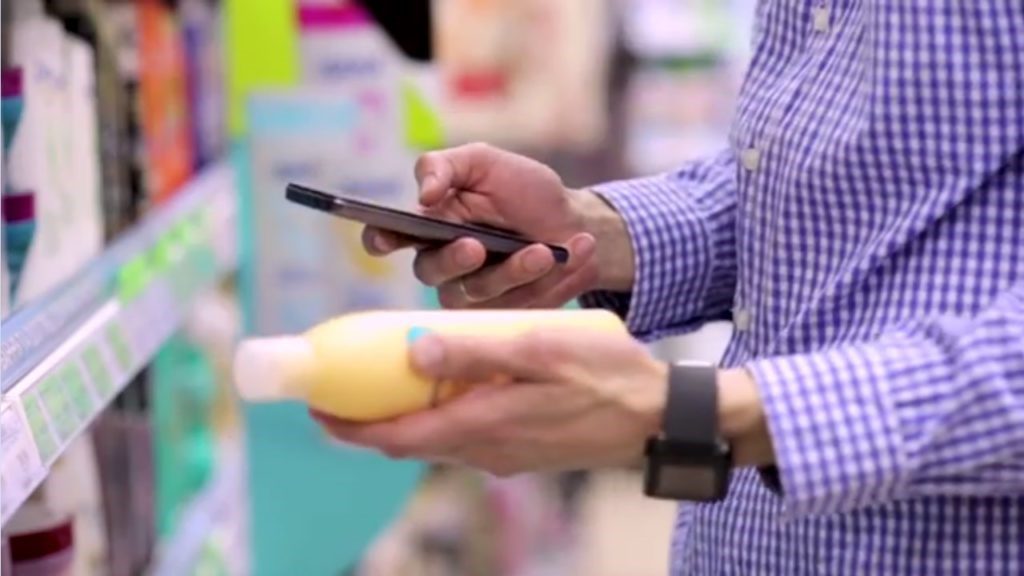
The way that consumers shop in-store is fundamentally changing. The rise of ‘Scan and Go’ technology, coupled with other industry developments, is helping retailers to overhaul the buying experience that they offer their customers. So, what do retailers need to know about Scan and Go, and what are its benefits?
The Scan and Go Story
Scan and Go technology is designed to make the shopping experience simpler, faster and more convenient for consumers. Just as barcode technology transformed the efficiency of retail stores in the early 1980s, Scan and Go is set to become retail’s next great disruptive technology, improving a range of existing retail practices.
Just as self-checkout machines are more efficient than waiting in line for an assistant to scan items and process your payments, Scan and Go is the next logical step in streamlining and enhancing the in-store experience.
Early deployments of Scan and Go technology require shoppers to carry a handheld scanner around the store with them. Instead of going through the lengthy process of scanning items at the end of the visit, customers can scan each item as they put it in their cart. This allows them to pack while they shop and arrive at the checkout with a pre-scanned list of items, both of which accelerate the payment process.
However, some of these implementations have been flawed and are not without their challenges. Shoppers still need to go to a checkout at the end of the process and retailers lose valuable floorspace to make room for storing the handheld scanners. The goal of frictionless shopping has not been fully realized.
But now there’s a new generation of Scan and Go technology. One that replaces the handheld scanner with a simple app on consumers’ smartphones. The surge in contactless payments and growing use of mobile payment services, like the various OEM Pay platforms e.g. Apple Pay and Samsung Pay, are testament to the fact that consumers are embracing innovative technology. Now retailers have what they need to take this to the next level.
How does Scan and Go shopping work?
In the more sophisticated mobile app versions of Scan and Go, shoppers scan items with their smartphones and then easily pay for their shopping in-app, removing the need to wait in line altogether.
Your typical user journey would work like this. You download the Scan and Go app of your chosen retailer at home and link it with your preferred payment card(s). Each time you enter one of the retailer’s stores, you scan items using your phone’s camera and pack as you go. Your app adds each scanned item to your virtual cart and, when you’re done, you pay in-app and walk out of the store. Simple.
Of course, retailers will want to deploy Scan and Go technology in slightly different ways. But there’s a whole raft of features and benefits that are hard to ignore.
What are the benefits of Scan and Go?
First up, it allows checkout lines and lengthy payment processes to be skipped altogether. By paying via an app in an in-aisle checkout process, customers enjoy a frictionless buying experience. This also means that retailers can free up floor space previously occupied by checkouts and redeploy staff to different roles. Automated digital receipts also avoid having a wallet full of paper. Good for consumers and the environment, not to mention saving the retailer money.
Scan and Go systems can also incorporate AI technology, augmented reality and personalized adverts to tailor the consumer experience. Proximity-based in-store advertising, pushed out as notifications to shoppers’ phones, can adapt displays and offers to customers’ individual preferences as they approach different beacons in the store. Retailers can also benefit from having an unprecedented insight into their customers’ purchasing data and shopping trends. This in turn can facilitate real time upselling and cross-selling to maximize sales.
What’s more, the buying experience can be enhanced. By combining all this with digital loyalty schemes and coupons, it’s even possible for consumers to choose the payment mix that suits their preferences, paying for a single basket with a combination of payment cards, loyalty points and offers. And to top it off, retailers can reduce their transaction fees by offering customers digital store-branded cards – a feature which can be easily implemented into a Scan and Go system. That means they keep more of the profits!
So, the advantages are numerous and the possibilities are endless. Growing numbers of consumers are willing to embrace technological innovations, and retailers are eager to find ways to improve buying experiences. It’s not a question of ‘if’ Scan and Go will become the norm – it’s a matter of ‘when’. Don’t get left behind.





