Inequality is a major issue around the world. However, it is even worse amongst those who have no access to banking.
The World Bank estimates that about three-quarters of the world’s poorest are unbanked.
If the world is to solve the problem of financial inequality on a global scale, there is a need to ensure that there is basic access to banking services.
What does it mean to be unbanked?
An unbanked person is one who does not hold an account at a formal financial institution.
As a result, such a person cannot access basic global financial services such as a savings account, credit, money transfers, and much more. To access these services they use informal means.
Who are those that live unbanked?
FairPlanet researched further. The unbanked are mainly:
- Those in households with unstable or low incomes
- Those in less-educated households
- Younger households
- More female than male
- Disabled households of working age
Some of the reasons why these groups are unbanked are:
- There is not enough money to open or maintain an account
- Avoiding financial institutions gives them more privacy
- They do not trust banks
- Accounts fees are unpredictable or too high
- Problems with credit, ID, or former accounts
- Banks do not meet them at their point of need
- Inconvenient hours and locations
What does this mean for financial inequality?
There is a high correlation between global statistics on the unbanked and poverty. For one, 75% of all unbanked people are poor. Besides that, they are unable to access basic social support services. In the developing world, it means things are much worse for women, as they make up the majority of the unbanked — 55% of the unbanked are women compared to 46% men. For the unbanked, access to any financial services comes at an extra cost.
For instance, they have to account for the cost of travel when they need financial services. This takes away crucial hours that could be used to earn. Besides that, they are left at the mercy of loan sharks who charge exorbitant prices for loans; this only serves to drive them further into poverty.
The technology advances that might help
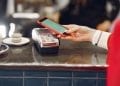
While the unbanked don’t have bank accounts, credit cards or loans – they do have smartphones.
Globally, six billion people around the world have access to a mobile phone – which includes at least half of the world’s unbanked population. The mobile money market is making great headway in developing countries.
The hyper-connected digital world of today’s commercial environment is one where participants are required to have a bank account to send and receive payments both at home and abroad. Services like Venmo, Paypal, and Payoneer aren’t compatible with the unbanked population, and services that are, such as Western Union and Ria, are exploitatively expensive.
With the advent of blockchain technology, the unbanked will have access to digital payments and remittances.
Blockchain technology is a decentralized, distributed and public digital ledger that is used to record transactions across many computers so that any involved record cannot be altered retroactively, without the alteration of all subsequent blocks.
This way, they will have the information needed for them to set up bank accounts and go on with their lives using this technology. The digital and verifiable profile, which is secured by the blockchain, will allow former refugees to access loans and build business wherever they go. In the process, it will be a step towards helping to solve the issue of global poverty. While most poor people do not have access to financial services, they do have smartphones, and these can be used to capture their details digitally.
FairPlanet is launching SatoshiPay on their site, an innovative micropayment solution. With a free $10 to donate, FairPlanet is a perfect example of a company taking the right steps to a financially inclusive world.