Today, Consumers use cash in 77% of all transactions worldwide[1], and growth rates of cash in circulation are predicted to continue. Developing countries in Asia and Latin America have extremely high cash usage, with upwards of 90% of transactions being conducted in cash in some regions. In fact, even banked populations in those developing countries tend to voluntarily choose to convert digital forms of money into cash as quickly as possible. Across the globe, cash is still the leading payment method at point of sale[2].
The bottom line is that cash is a mainstay as a form of payment across the globe.
The ATM remains the only channel that provides cash access anytime, anywhere, at a lower cost—and it’s increasingly mobile-friendly, API-integrated and capable of facilitating the movement of cash between the physical and digital worlds. Your self-service strategy should therefore be focused on maximizing the channel to take advantage of its huge potential.
Old-School Strategy No. 1: Position ATMs as Secondary to the Branch
What to Do Instead: Position ATMs “as the Branch” by Automating All Cash Processes
FIs are constantly pressured to optimize the cost of their physical footprints. Branch size and location, placement of ATMs, where to open and where to close locations all impact the business model.
Self-service is a key asset FIs have in their strategy to achieve a “right-sizing” approach as the branch model evolves.
ATMs enable transaction migration, extend transaction sets for consumers and automate cash processes, making them an integral tool “in the branch.” However, the modern ATM goes beyond this function and can now act “as the branch,” with FIs using this physical asset as an extension of their distribution strategy; as a market entry position to introduce the brand and provide flexible access to financial services and cash without building a full branch, as an extension to services offered in a branch outside of normal branch hours, or, as a leave-behind strategy for markets and locations where branches are no longer viable.
Strategically, the ATM is a vital tool for enhancing brand perception, providing access to financial services and extending the digital capabilities of a financial institution by bridging the physical and digital worlds.
Old-School Strategy No. 2: Focus on Scale and Accessibility
What to do Instead: Focus on Seamless Journeys
As FIs have built their fleet network over the decades, the focus has been on providing easy access to banking touchpoints. A modern self-service strategy must go beyond simply providing access—it should offer a tailored, targeted experience that differentiates between various consumers.
This “journey thinking,” along with leveraging Big Data, has been identified as a top priority by FIs around the globe.
Researchers paint a similar picture: in the latest Retail Banking Trend Report, the same two topics where ranked first and second. Interestingly in 2018, Journey thinking was No. 1 and in 2019 Big Data has top priority.
Self-service is a critical touchpoint in various journeys:
Consumer journeys
- Consumers are used to controlling their own journeys in their digital world today; leveraging apps on the mobile device and engaging with a variety of providers.
- Enhancing and managing consumers’ end-to-end journeys are key to FIs remaining relevant in the eyes of the consumer.
- Banks must remove challenges and friction along every step of the journey, and anticipate consumers’ needs by “knowing,” “showing” and “wowing” them at each stage.
Small & Medium Business Journeys
- SMBs are an important client base for FIs—in many cases, their business is still extremely cash heavy and they have a strong desire for cash services.
- In many countries SMBs account for about 70% of all cash-in transactions within the branch.
- Frictionless cash-based journeys for this segment are important, and, when migrated fully to self-service, can help reduce cash-related costs and create a closed-loop recycling environment that moves cash-in money through the system more efficiently.
Staff Journeys:
- Today, focus is often on the consumer and on improving their experience through data.
- Bank staff need the same context when engaging with consumers.
- The transformation and improvement of staff journeys goes hand-in-hand with improving consumer journeys: When it’s easier for a staff member to serve a customer, everyone’s experience is better.
Old-School Strategy No. 3: When it Comes to CIT, Just “Set it and Forget it”
What to do Instead: Carefully Evaluate Areas Where the Cash Cycle Can be Optimized
The prevalence of cash begs the question, if cash is so heavily used across the majority of the world, how effectively are consumers able to connect and access their money? Ironically, the cost per cash transaction increases when the total number of cash transactions decrease. The handling of cash holds multiple costs including transport, handling and interest charges on ‘inactive’ cash. Cash handling therefore remains costly if not managed correctly. Modern, data-driven approaches to cash management can dramatically transform the cost to operate a fleet.
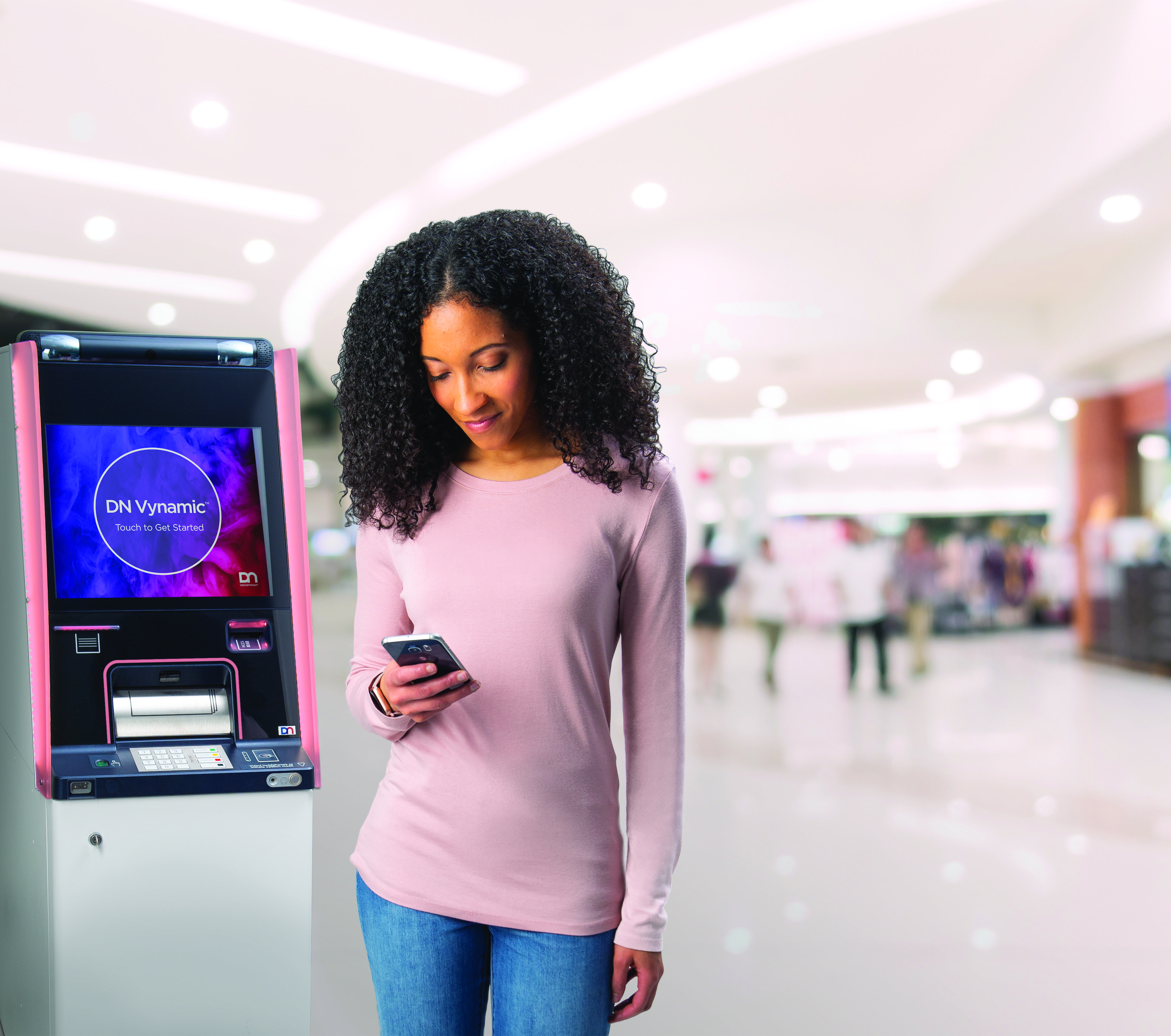
The world has changed—and so has self-service. Modern ATM fleets can be a valuable component of an FI’s digital strategy, as long as the right pieces are in place to enable such a modern experience. DN Series™ ATMs from Diebold Nixdorf were designed to meet the needs of today’s consumers and prepare FIs for the future of connected commerce. From advanced security features to optional recycling capabilities, integrated software and AI-driven service, discover why FIs around the world are using DN Series to offer their consumers an unsurpassed experience every time, everywhere.
Learn more at DieboldNixdorf.com/DNseries.
About the Author
Jerome Amara VP Systems banking, EurAsia
Started with Diebold Nixdorf in 2000. Previously, from 2014, Jerome had been Vice President Systems for Europe, Middle East and Africa. Jerome has held various senior positions in Sales, Business development and portfolio management in EMEA and Asia Pacific. Prior to his return to Europe in 2016, he served as Vice President Sales, Asia Pacific from 2014-2016 and Vice President Sales and Marketing & MD South East Asia from 2013 till 2014.
[1] “Global payments: Expansive growth, targeted opportunities,” McKinsey, 2018
[2] “Global Payments Report,” Worldpay, 2018