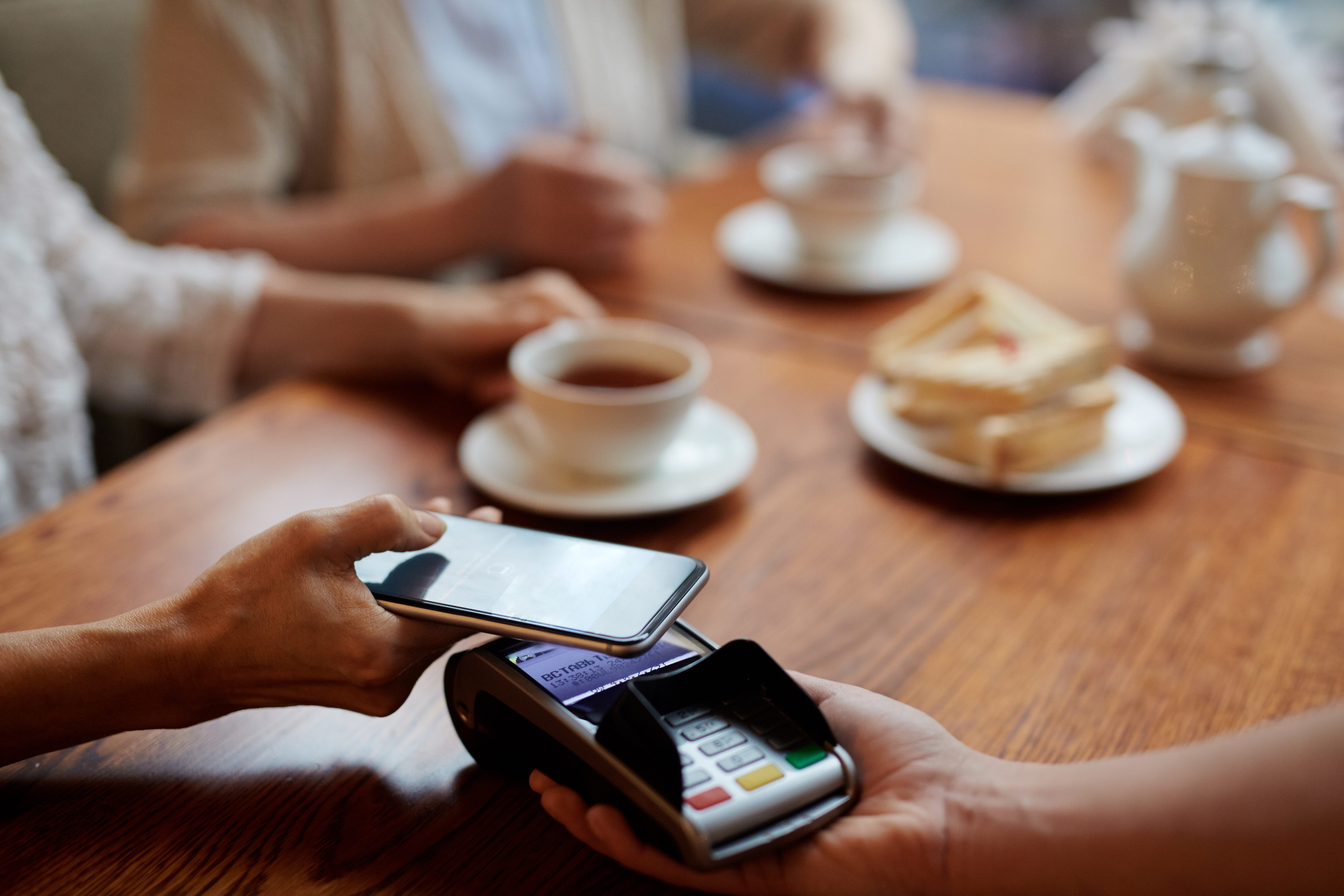
Apple Pay mobile payment adoption has reached a notable milestone, with the digital wallet surpassing Starbucks in the number of U.S. mobile payment users. Estimates put Apple Pay at 30.3 million users in 2019, compared with 25.2 million for Starbucks, as consumers increasingly use smartphones and digital wallets to make everyday purchases.
The comparison, however, requires context. Apple Pay is a universal mobile wallet that can be used across a growing network of NFC-enabled retailers, while the Starbucks app is a closed-loop solution designed primarily for purchases within a single merchant ecosystem. With contactless acceptance expanding and issuers distributing more contactless debit and credit cards, Apple Pay’s larger user base may say as much about the evolution of the broader contactless payments market as it does about competition between the two payment platforms.
Several news outlets reacted to a report that the number of Apple Pay users is now greater than the standard bearer for mobile payments: Starbucks. One such article can be found posted on MacRumors. Apple Pay beating out Starbucks is interesting and is an indicator of how mobile payments are evolving, but does it really matter so much?
From the article:
In 2019, Apple Pay will have 30.3 million users, or 47.3 percent of mobile payment users. That compares with Starbucks’ 25.2 million customers via its mobile app in the same year, representing 39.4 percent of mobile payment users.
Nearly 64 million people (30 percent of all U.S. smartphone users) are expected to make use of mobile payments this year, a 9.1 percent increase over 2018. In terms of demographics, nearly 50 percent of all smartphone users are adults aged 25 to 34, so the growth of mobile payments is expected to be strongest in this age group, although digital wallet use is said to be growing across the board.
While the growth is worth understanding, is it really newsworthy that a universal mobile app that can be used at any NFC enabled merchant now has more users after five years of existence than the Starbucks mobile app that can be used at one merchant?
Also from the article:
Citing data from Digital Trends, the analysis predicts Apple Pay will be available in 70 percent of U.S. retailers by the end of 2019.
Apple Pay and all other contactless forms of payment have been predicted by the global networks to be available in 70% of merchants as retailers activate their contactless terminal capabilities to capture contactless card transactions. Issuers have begun in earnest this year to replace debit and credit cards with dual, contact and contactless capabilities.
One item that wasn’t covered in the article: how much are banks paying Apple for each transaction? Most contracts between issuers and Apple require issuers to pay Apple 15 basis points per transaction. If all 30.3 million Apple Pay users spend $1,545 per year, the average mobile spend quoted in the article, that’s over $70 million annually.
Apple Pay mobile payment adoption demonstrates the growing reach of universal digital wallets, but user counts alone don’t tell the entire story. Apple Pay benefits from expanding NFC acceptance and the ability to support purchases across many different merchants, giving it a fundamentally different value proposition than a merchant-specific app like Starbucks.
Perhaps more important is the transaction volume those users generate. As Apple Pay usage increases, issuer fees associated with those transactions could create a meaningful revenue stream for Apple, illustrating why growth in mobile payment activity matters beyond simply determining which wallet has the most users.
Overview by Sarah Grotta, Director, Debit and Alternative Products Advisory Service at Mercator Advisory Group