


At Spendee, we are deeply touched about the current world situation. Following the crisis, we’re aware how serious the circumstances are. Please, take this article as an insight to better understand the effects on shopping behavior that we are able to monitor with our data.
There is no doubt that the COVID-19 crisis affects the whole planet. Thanks to our data, we were able to visualise how the financial habits of our users have been changing. Are you a data enthusiast? We hope you’re ready to find out what the trends are like in different countries, what they have in common, and what spending categories the pandemic effected most.
First, let’s look into different regions.
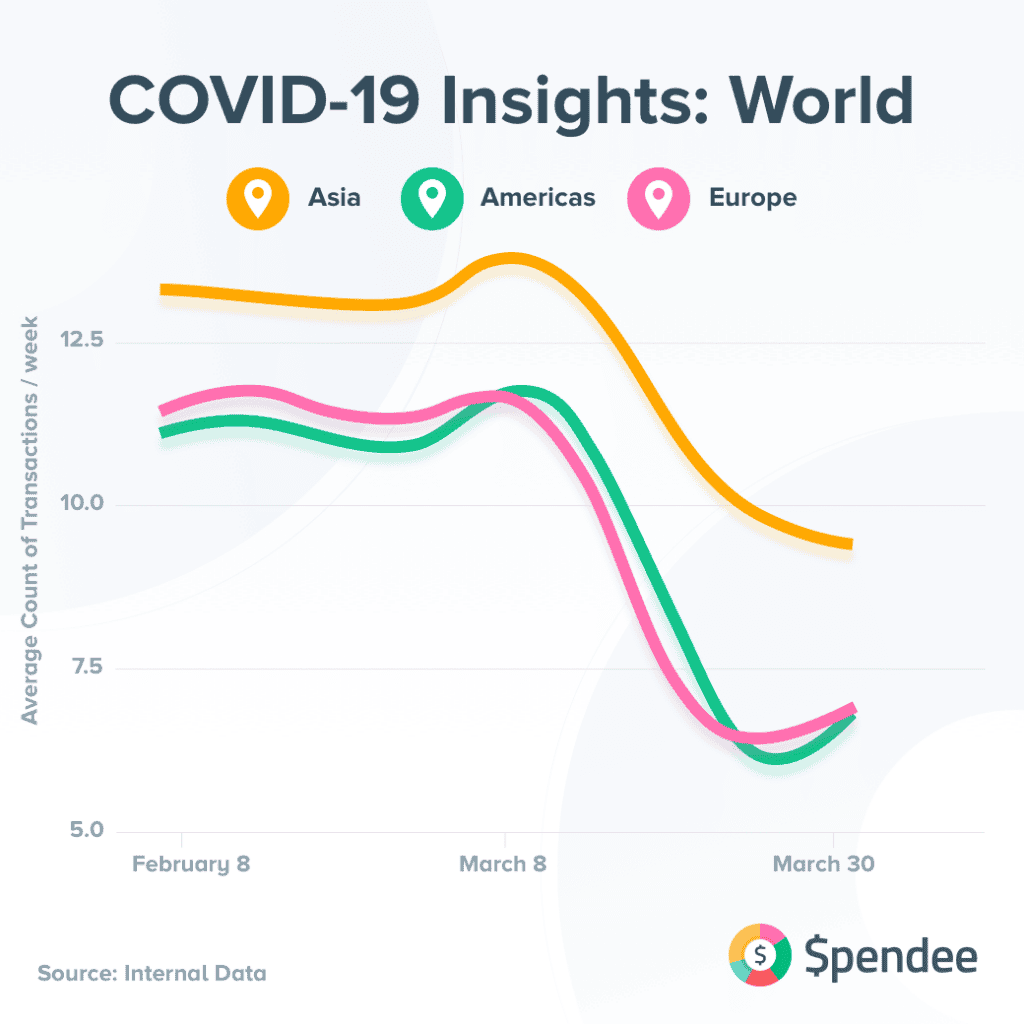
Different regions usually follow different spending patterns. People in Asia tend to make more transactions, compared to Europeans or people in North and South America. Interestingly, the effect of the global pandemic on personal finance struck the same everywhere! All regions started to decline in the same week. Let’s dive a bit deeper into each region!
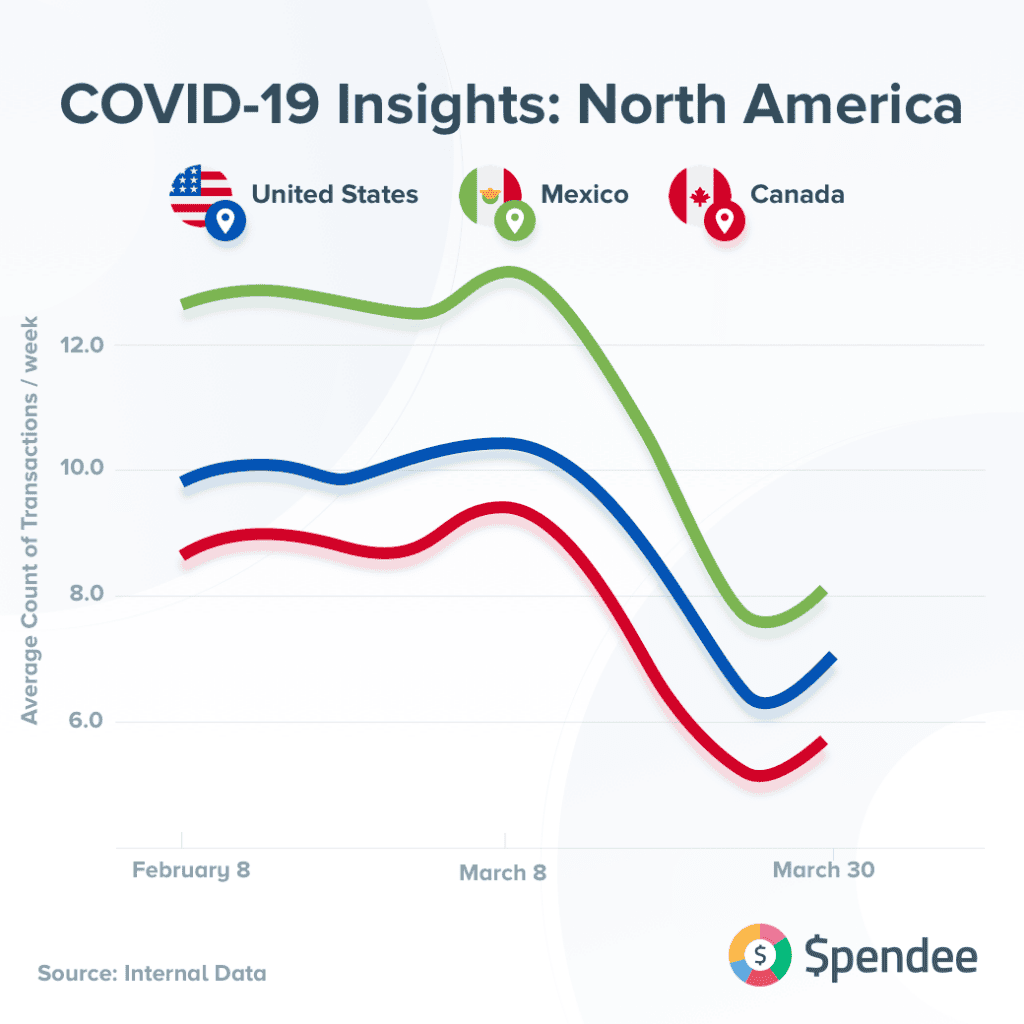
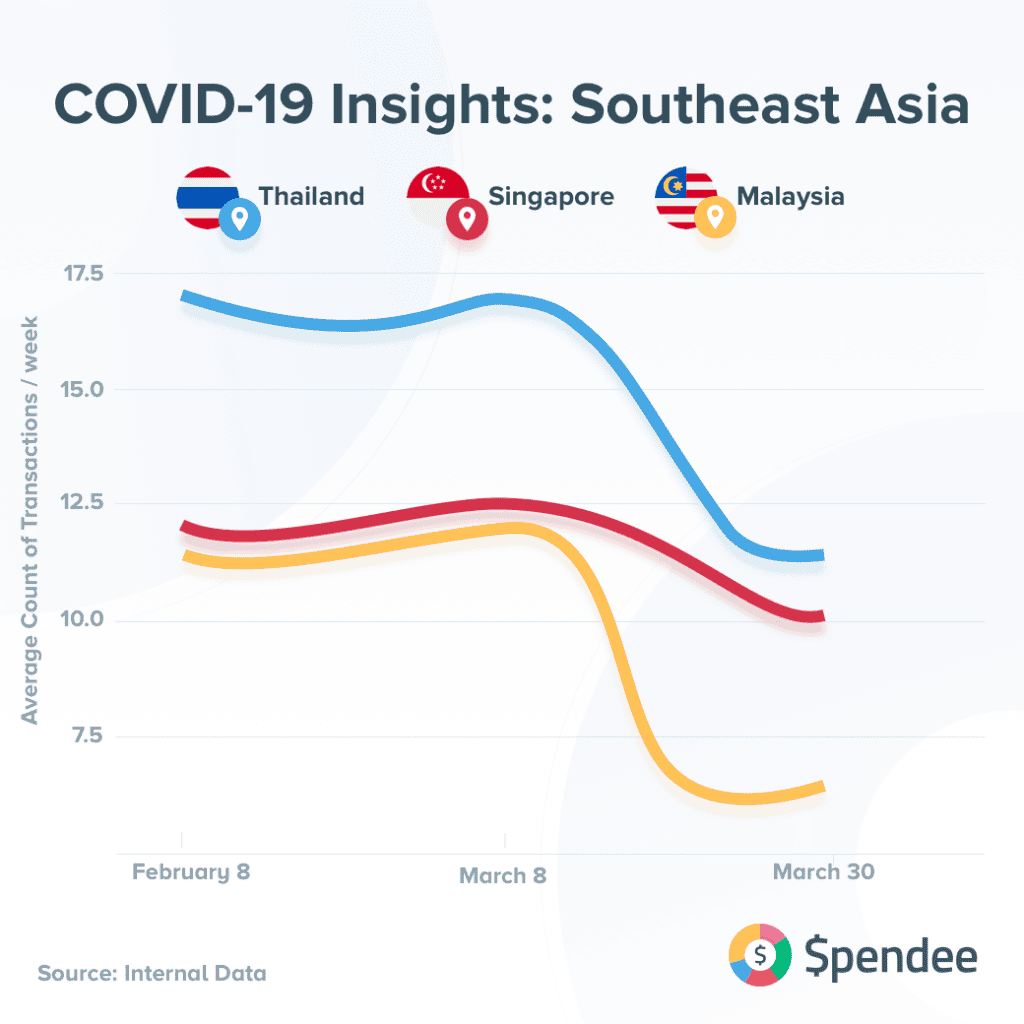
If you look closely at the end of the graphs — you can observe a starting trend upward in most countries. It could mean that people are stocking up again, getting used to the new situation, or just slowly getting back to their old habits where possible. However, this is just a hypothesis.
The average number of transactions per user is still nowhere near the pre-coronavirus levels.
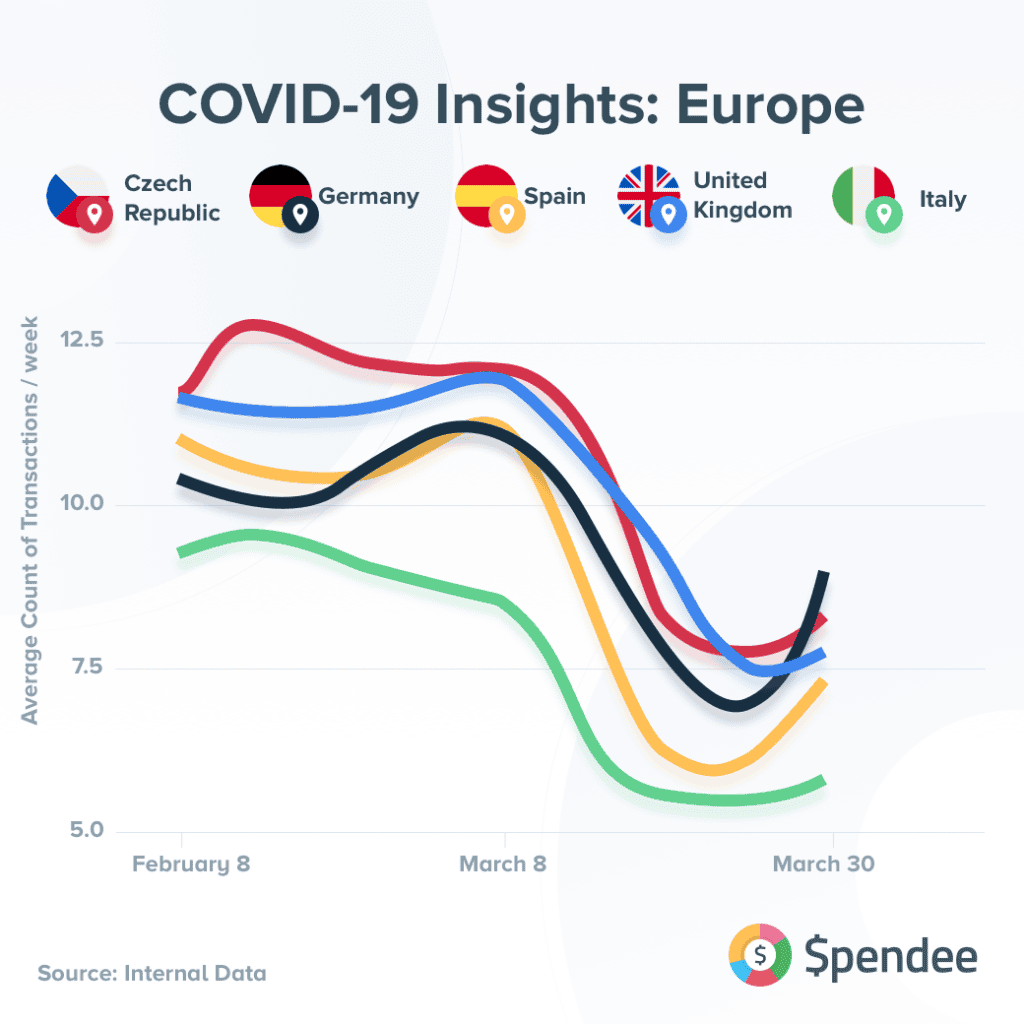
In Europe, it’s interesting to analyse different patterns of reactions. For example Germany is already on its way back to the old shopping habits, while Italy is struggling to climb up due to many shopping restrictions.
Most affected shopping behavior categories
Without a doubt, eating out took the largest hit. The number of transactions per user declined as well as the overall number of users that spend in this category. This is likely due to the fact that restaurants are closed in a lot of countries. People are staying home — and overall, there are fewer opportunities to create additional transactions.
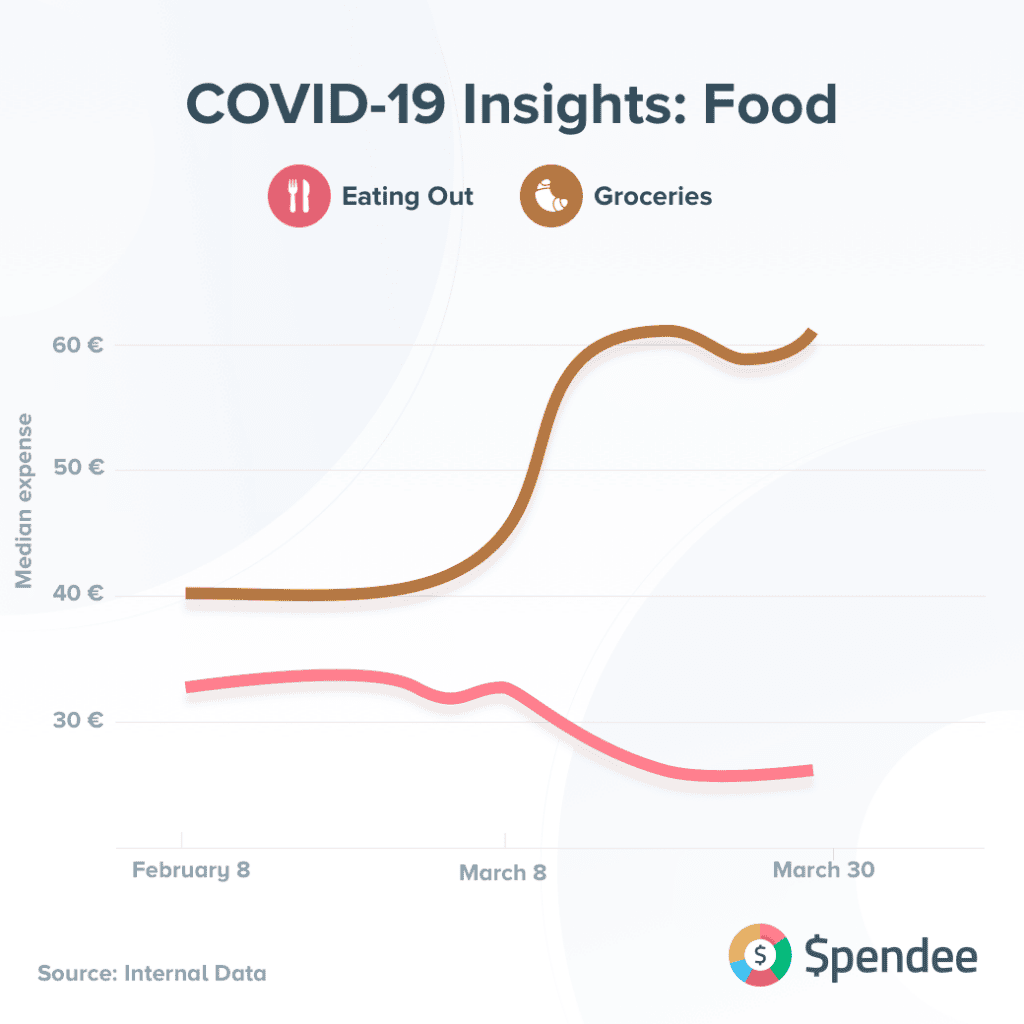
Around 23–27% of our users were spending in the groceries category. We’ve seen a significant decrease in users’ expenses for eating out. When expenses in this category occur, most often it’s a food delivery service.
Even though the groceries category declined as well, when it comes to the number of transactions per user, the number of users remained similar. Most importantly, the average expense per purchase increased sharply. This means that people buy more supplies at once. They’ve taken responsible steps to avoid frequent grocery shoppings and replace eating out by making their own meals or ordering delivery. This is a good sign that people are indeed limiting the risk of spreading the COVID-19 virus when shopping.
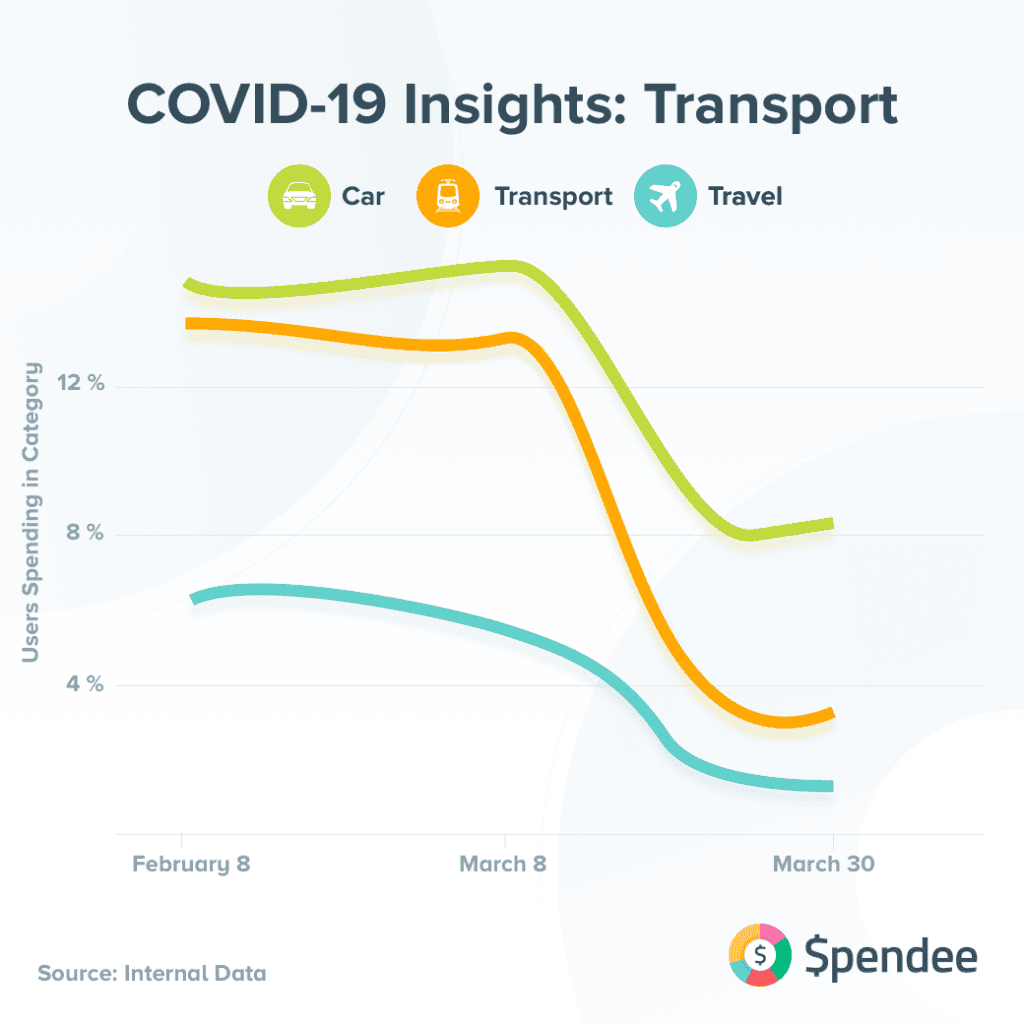
We see a decline in the number of users that spend in the Gas, Public Transport and Foreign Travel categories. This means our users’ mobility decreased and people tend to stay home, as recommended by WHO and governments.
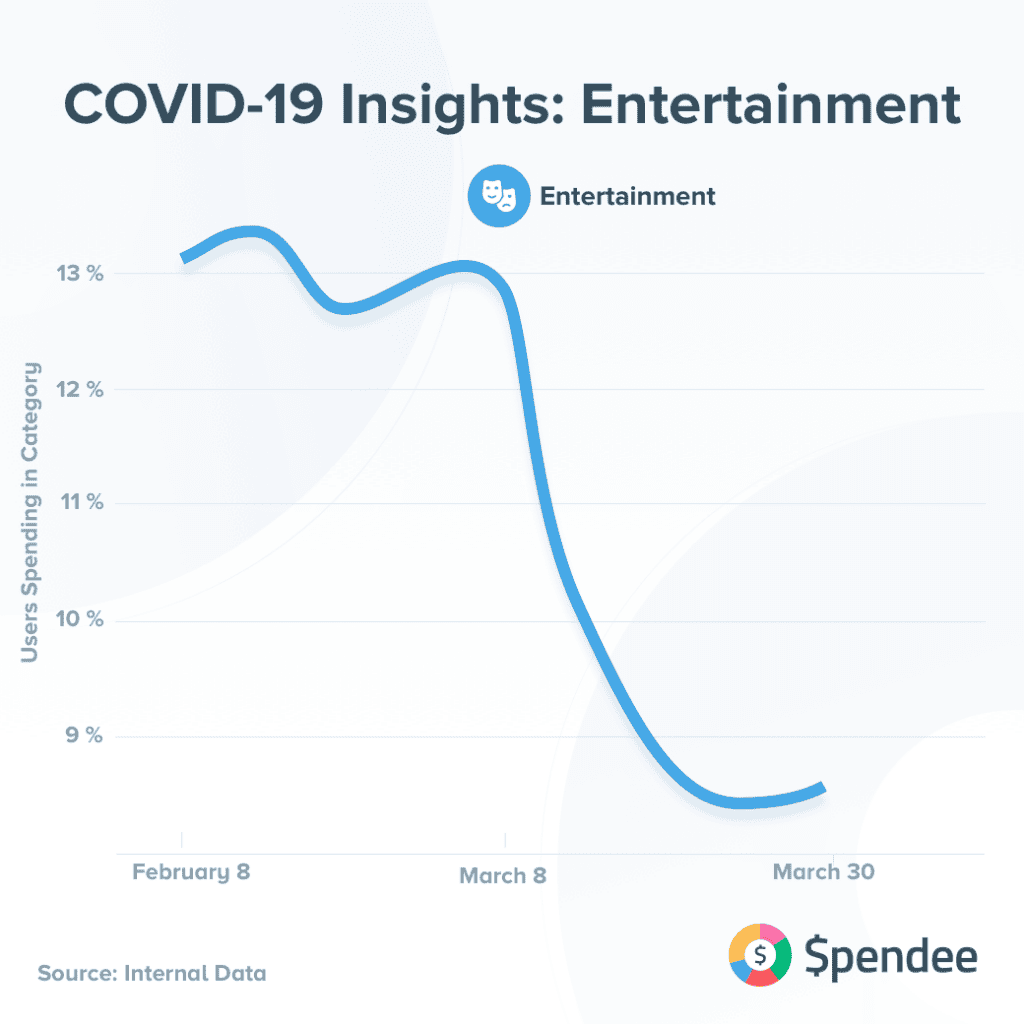
We can also analyze a decline in the Entertainment category, since most entertainment facilities like cinemas, sport stadiums, concert halls, etc. are closed. These expenses again appeared in the same week, when financial transactions all over the world started to fall.
We sincerely hope that by taking action together, we will only keep getting closer to the world we knew before. We hope you all to stay healthy and full of energy to fight together! Feel free to share with us some of your personal stats — do they follow a similar trend? What changes did you see in your stats? https://medium.com/spendee/covid-19-pandemic-how-did-shopping-behaviour-change-across-the-world-b8cea83f3523


