We’re living in a time of record-breaking inflation rates. The most recent available data from the Consumer Price Index (CPI) shows that the cost of living has continued to rise throughout December, making the beginning of 2022 a testing time for consumers both in the US and the many other nations impacted. With the spending power of money continuing to fall, where is the best hedge against inflation?
In all, prices climbed 7% year-over-year in the US, representing the largest hike since June 1982. The Bureau of Labor Statistics (BLS) acknowledged large increases in food and second-hand vehicle prices as key indicators of inflation over recent months. Whilst energy prices have begun to cool since November 2021, the 12-month gains are still almost 30%.
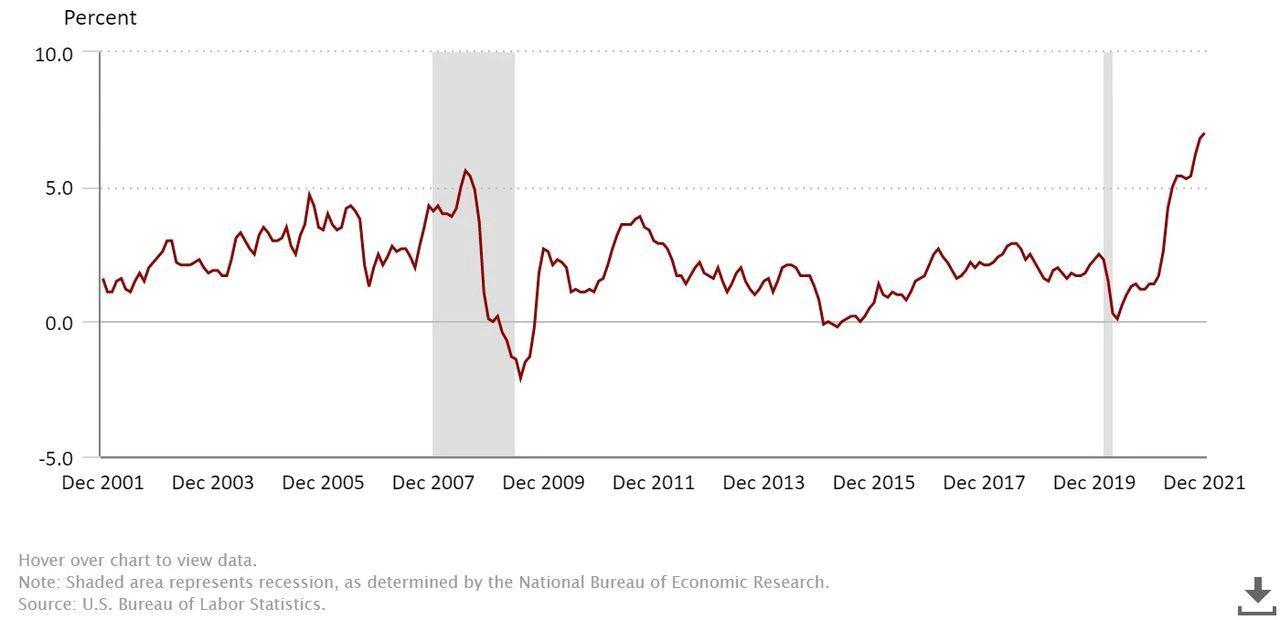
As the data above shows, inflation has now comfortably surpassed its 20th Century peaks during the 2007-08 financial crash, meaning that many consumers are now facing up to a living cost bubble that they’ve never before experienced.
With this in mind, how best can individuals manage their finances to maintain the value of their money as everyday prices continue to rise?
“In periods of high inflation, investors may consider a higher allocation to stocks in their portfolios,” explains Maxim Manturov, head of investment advice at Freedom Finance Europe. “As higher inflation has long been expected and many assets have “factored” rising inflation into their valuations, it is possible that inflation is already approaching its peak.”
“Inflation has risen sharply due to strong consumer demand and continuing labour and supply shortages. Although price pressures are likely to ease to 3% in 2022, many economists estimate, given the tightening of QE by the Fed. That said, despite the more hawkish policy, investors should continue to invest in equities as they tend to hold up better during inflation, especially if inflation is accompanied by growth and growth is still in force,” Manturov added.
Commodities like gold have often been identified as solid inflation hedges, but following huge growth among the volume of retail investors buying into stocks and shares, could we see more stability in the stock market?
The dwindling impact of gold
As a precious metal that’s not pegged to a single national currency or central power, gold should, theoretically, act as a strong inflation hedge. However, it appears that this is no longer the case.
Following the Labor Department’s report that inflation has reached highs that haven’t been seen since 1982, the price of gold has only risen by around 1%.
“This year, you’ve seen the inflation hedge really being in the [real estate investment trust] and real estate segment of the market as well as stocks in general,” Nancy Tengler, CEO of Laffer Tengler Investments, told CNBC.
“If the dollar continues to weaken, gold should get a move, but a number of the other metals may actually be better places to play because there’s a narrative behind those in terms of planetary decarbonization [and] green energy.”
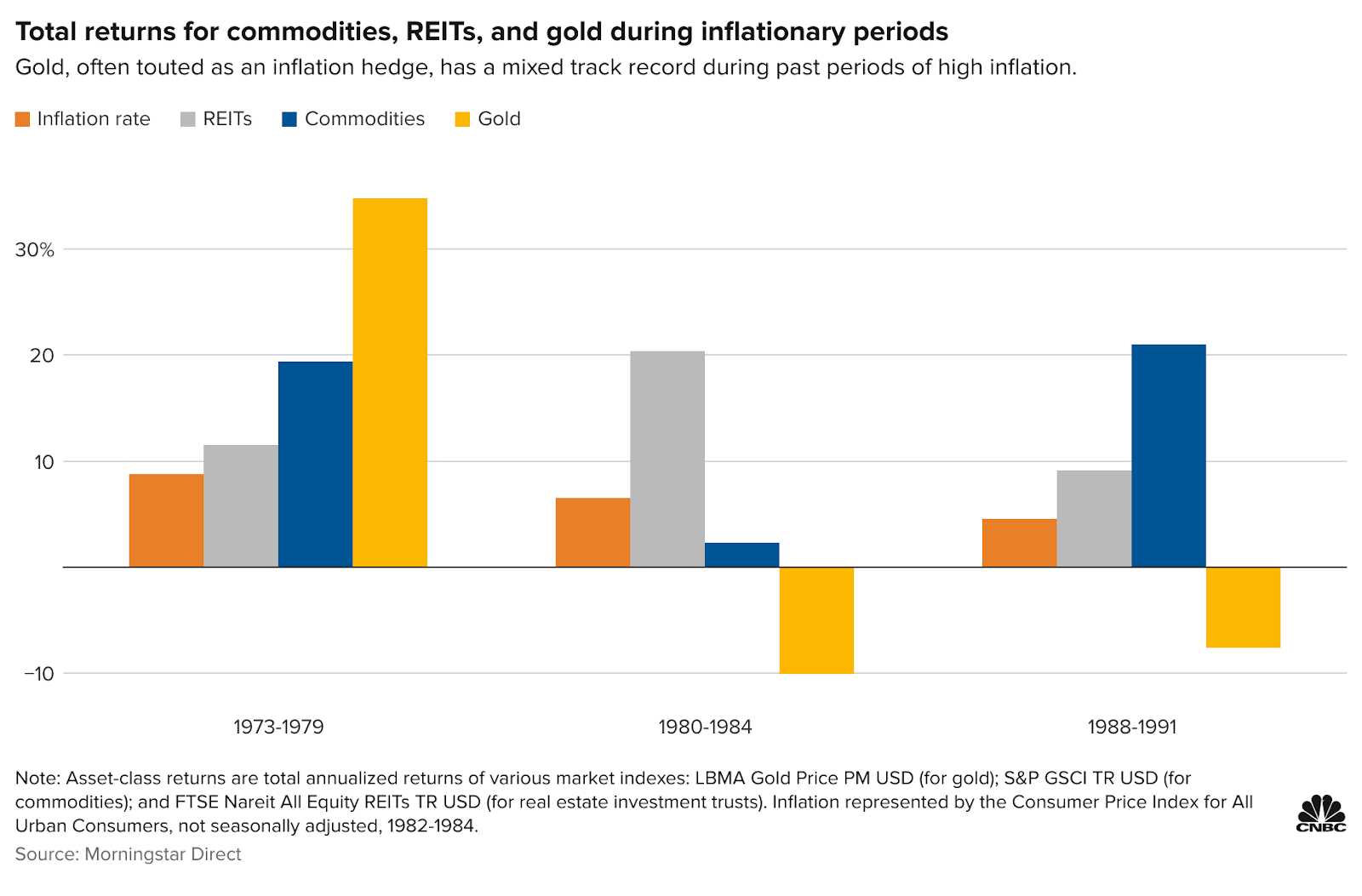
Although gold has historically performed well during inflationary periods, its influence has weakened towards the end of the 20th Century and has found itself struggling to keep up with inflation rates.
Growth stocks and REITs could be the solution
Real estate investment trusts (REITs) are companies that own and operate income-producing real estate. Because property prices and rental income typically rise when inflation begins to grow, REITs are seen by many investors as the best example of an inflation-proof investment.
REITs consist of a pool of real estate that pays out dividends to investors. If you’re looking for broad exposure to real estate alongside a low expense ratio, it may be worth buying the Vanguard Real Estate ETF, for instance.
Likewise, growth stocks have consistently outperformed as investment options over the course of the 21st Century, with FAANG favorites posting impressive growth over longer periods of time.
Because the rising cost of living pushes consumers towards more cost-effective eCommerce and cheaper forms of entertainment, we can expect stocks like Amazon (NASDAQ: AMZN), and Netflix (NASDAQ: NFLX) to recover faster following widespread market downturns.
Although we’re likely to continue feeling the pinch of inflation across much of 2022, the impact that it’s had on a wide range of investment options has been seismic. Many commodities and stocks alike have taken hits as the rising cost of living have been compounded by the emergence of the omicron variant of Covid-19.
Despite harsh pullbacks, the falling prices of assets may actually represent a buying opportunity for investors looking to maximize their profit margins for the new year, and as companies begin to announce their Q4 2021 financial results, there’s likely to be more entry points available for stock purchases.
Although 2022 looks set to be impacted by the sprawling inflation rates that emerged in recent months, there are plenty of opportunities for investors forming across the stock market, too.