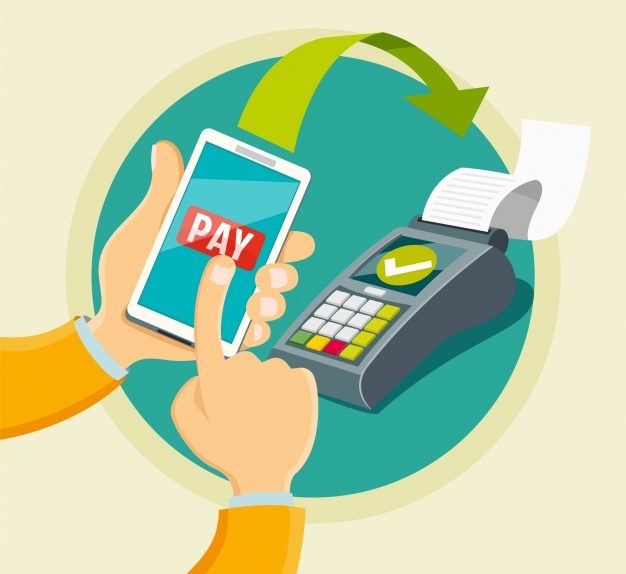
NFC, or Near Field Communication, is a wireless technology that allows two devices to communicate with each other when they are close together. NFC can be used to exchange information between devices, such as two phones or a phone and a computer. NFC can also be used to make payments using a credit or debit card. In order to use NFC for payments, the credit card must be enabled with NFC technology. When the card is placed near the NFC reader, the reader will communicate with the card to process the payment.
Recent news coverage of China destroying and cleansing potentially Coronavirus-infected currency is just another reason to keep your credit card handy. It is a good use case for NFC.
Cash is so icky. Who knows where it has been and who has touched it?
USA Today answers the question, “Can the coronavirus spread through cash exchanges or live on credit card?”
Cash is not a good vehicle to transport respiratory viruses, however, cards have a little bit more potential,” said Dr. Susan Whittier, a clinical microbiologist at New York-Presbyterian Hospital at Columbia University Medical Center. “If someone is coughing, and then they hand their credit card to someone across the counter, I wouldn’t rule out the potential of transmission.”
Still, Chinese banks have started essentially washing money to destroy potentially infected cash before it’s handed back out.
“Cash received by banks must be sterilized before being released to customers,” the Chinese government’s website recently announced. The nation is using ultraviolet light and heat to kill any bacteria on the surface of currency.
The article points you to a Chinese government site that returns a full page of Cantonese text. Any research worth its salt knows that Google Translate can handle this in a second.
- Banks receive cash disinfection before they can put it, the central bank has urgently allocated 4 billion new notes to Wuhan … Authoritative release!
The UK’s Daily Mail explains the methodology:
Banks use ultraviolet light or high temperatures to disinfect yuan bills, then they seal and store the cash for seven to 14 days – depending on the severity of the outbreak in a particular region – before recirculating them.
The virus, which has infected 66,492 people in China and spread to more than two dozen other countries, has sparked a rush to disinfect public places and minimise contact between people.
This is one of those stories with global pick-up. Even in Zimbawe, where we see The Herald reporting:
China’s central bank in Guangzhou announced it will destroy cash collected by hospitals, buses, and markets in coronavirus-afflicted areas to curb the outbreak’s contagion, financial news outlet Caixin reported Saturday.
The People’s Bank of China ordered all paper currency with high exposure to the outbreak withdraw cash for either destruction or disinfection, according to Caixin.
Commercial banks were told to place banknotes from infected areas aside, clean them, and hand them to the central bank.
The coronavirus continues to spread around the world and most heavily hit China’s population. The outbreak is responsible for 1,670 deaths, with nearly 70 000 infected as of Sunday afternoon.
I’d say avoid the issue altogether and use your NFC-enabled credit card. Keep your germs to yourself, and don’t touch that dirty cash!
Overview by Brian Riley, Director, Credit Advisory Service at Mercator Advisory Group