Consumer demand for convenience continues to fuel the growth in e-commerce. As the number of online options increases, so do consumer expectations. Visually appealing sites with crisp photography, detailed information and customer reviews, and easily accessible customer service, including 24 hour live chat, are among the more common and desirable features. However, speed and efficiency are crucial to a positive customer experience.
Online customers are not the most patient shoppers. If a website doesn’t load fast enough, they tend to hit the back button. If navigating the website takes more than a few clicks, they may take their business elsewhere. If there is any friction in the checkout process, they may abandon the transaction. To avoid consumer frustration and lost sales, merchants need to create a seamless shopping experience from start to finish.
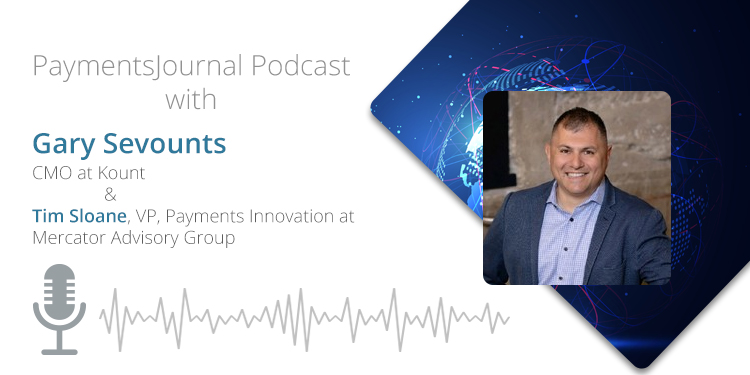
To talk about how to reduce friction in the consumer experience, PaymentsJournal sat down with Gary Sevounts, Chief Marketing Officer, at Kount, and Tim Sloane, VP, Payments Innovation at Mercator Advisory Group.
Consumer Experience
As consumers are faced with more online retail options, reducing friction and providing a positive shopping experience is increasingly important to business success. Research shows that “41% of shoppers say that they would increase their spending with a business if they received a more tailored experience,” stated Sevounts.
For merchants to provide a premium, tailored shopping experience, they must be able to recognize their returning customers immediately, not only in order to present options based on their previous interests and purchases, but also to provide smooth checkout experiences. “Being able to recognize these customers allows merchants to reduce friction by avoiding the unnecessary authentication of known customers,” noted Sevounts.
Reducing Fraud, Chargebacks, and False Positives
Fraud prevention strategies must be able to identify returning customers instantaneously. If the trust level is high, the transaction should be seamless. If the customer has been identified as a good customer but something looks a little off, merchants need the opportunity to elevate authentication requirements so that they won’t lose legitimate sales by falsely identifying a transaction as fraudulent.
On the other hand, the ability to quickly and accurately identify fraud enables merchants to stop bad transactions before they happen, eliminating the substantial costs associated with disputed transactions and chargebacks.
Business Expansion and Fraud Exposure
As businesses strive for growth, some may simply expand their product lines or alter their business models to reach new customers. For example, in response to the global pandemic, many retail stores are setting up websites to take online orders for curbside pickup. Other businesses may expand into global markets. Any time a business targets new customers or new markets, there is increased exposure to fraud.
For businesses entering into the global market, it is essential to partner with a global organization for fraud prevention. Local retailers have a limited data set with which to evaluate transactions. This leads to higher losses due to fraud and increased transactional friction resulting in the loss of good customers.
A merchant may collect data from an individual customer a few times over the course of a year, whereas a global network has numerous opportunities to collect data from that same customer shopping at multiple sites, resulting in greater confidence surrounding each individual transaction.
In addition, a global partner can “link local interactions to international fraud patterns,” added Sevounts. This enables merchants that sell products in the global marketplace to trust the payments are legitimate and secure.
Furthermore, a global partner can facilitate Strong Customer Authentication (SCA) compliance for transactions involving the EU. SCA is a new European regulation that requires multifactor authentication for all electronic payment transactions when one or more parties are in the European Union. However, if the transaction value is below a certain amount, the transaction may be exempted from the SCA requirements, provided that the merchant stays below a certain fraud level. Being able to take advantage of these exemptions significantly reduces friction in the checkout process.
Kount Partners with Barclays
The challenge for merchants is delivering a seamless online experience for customers without compromising their efforts in fraud prevention. Kount and Barclaycard Payments have partnered to provide a solution that offers both industry leading integrated payments and fraud protection while improving the customer experience by reducing friction and maximizing sales for the merchant.
“The ability to integrate [with] the financial institution to help them reduce fraud is huge, especially given your identity network and its ability to recognize safe users, the reliable users, and perform an appropriate authentication only as necessary,” concluded Sloane.
Kount’s adaptive AI model gathers and learns from vast amounts of data. This advanced AI model coupled with the Identity Trust Global Network analyzes 32 billion annual transactions worldwide in real time using distinct fraud and trust identifiers. Pooling data from countries all over the world and across a wide range of industries allows the AI model to identify risk and determine trust levels behind each transaction with a high degree of accuracy.
A leader in global fraud prevention, Kount helps businesses to expand quickly and safely. Its highly effective fraud prevention platform allows businesses to stay below the SCA fraud threshold to qualify for exemptions.
The Takeaway
Kount’s partnership solution helps businesses reduce fraud and fraud related costs while increasing revenue. Both consumers and merchants benefit from a frictionless and secure payment experience that eliminates a majority of false positives and processes the maximum number of legitimate orders. Merchants save money with fast, accurate identity trust decisions that reduce fraud, chargebacks, and manual reviews. Kount and Barclays are hosting on webinar on June 25, 2020. Register here.https://go.kount.com/webinar-capitalize-on-3ds2.html