Subscribe to our podcast via:
 |  |
The typical payments acceptance switch fills a key mediator role between smart cash registers and a range of cloud service providers. According to OLS, however, it’s no longer enough to simply facilitate the expected retail functions – accepting various forms of payment, selling and reloading gift cards, applying loyalty points, sending e-receipts, et cetera.
Today’s consumers and retailers want to do more, and therefore, switches also must do more. Retail and financial services are converging to meet consumer and merchant demand, so switches must evolve to meet those demands if they wish to remain competitive.
Chris Storbeck, EVP Sales and Marketing, and Andy Orrock, COO, of OLS sat down with us to discuss what a switch provider is, how a switch can transform retailers into a literal one-stop shop that provides much more than the goods on its shelves, and what technologies like Asian mobile payment apps and other contactless methods will mean in the US market.
What Is a Switch?
Every transaction type requires a different process, from buying a gift card to paying a bill. A switch choreographs the interaction between an intelligent cash register and cloud service providers. Put another way, it manages how the point of sale integrates to the customer and completes the transaction with a range of service providers.
“The switch is basically a traffic cop as we can help route those transactions, be it to a processor, to a bill payer, to whomever it may be, and make it easier for the merchant to add those services, bring them to the marketplace faster, and improve on how the process is actually done,” said Storbeck.
However, the modern switch must not be limited by this definition. According to Storbeck and Orrock, the time has come for the switch to do more, and reshape how consumers conduct financial activities.
The Truly One-Stop Shop
People run errands. It’s what people do. Storbeck says retailers should not neglect the current opportunity to support their customers even more. A marketplace shift is taking place wherein consumers want to find more services and ease from the retail locations they’re already visiting, and it turns out that giving them what they want can be a win for everyone involved.
Merchants who previously offered financial services such as buying gift cards, topping up generic purpose reloadable (GPR) cards, cashing checks, or paying bills at a special service desk are now starting to offer these services at the regular point of sale, particularly in mass merchant and grocery settings.
Storbeck says adding value for customers in this way can drive additional traffic and loyalty as people come to rely on the retailer as a one-stop shop for activities they previously cognized as “financial services.” This added traffic naturally contributes to more sales and revenue for the retailer.
Storbeck notes that it also benefits financial service providers because they no longer have to provide their own outlets to deliver these services, which translates into cost savings.
Back to the Future with Direct Debit
OLS got its start with traditional products that hooked into traditional debit and credit rails. Meanwhile, its parent company InComm has a background in retail, prepaid card activation, GPRs, and the digital equivalents of these products. It’s also working to help merchants draw financial services into their mobile apps and make them seamless.
The past and future may be fairly balanced here, but there’s one big component that doesn’t quite fit into either category. Decoupled debit shifts interchange off merchants’ plates in favor of direct debit to checking accounts, and many are now looking to incorporate it into their apps.
Direct debit isn’t a new capability, says Storbeck, but it does answer new questions and challenges by reducing the cost of acceptance, motivating customers with loyalty points, and helping retailers control data better. It also opens the door for other currencies, such as loyalty points that banks, credit card companies and airlines want customers to burn because it’s a liability to keep them on the books.
For those reasons, many are starting to gravitate back toward this not-so-new capability to serve modern consumers and their needs.
And one of the biggest needs, notes Storbeck, will be serving younger demographics, which don’t always even carry a credit card. These consumers have debit accounts and use apps to push money to each other. Let them do the same at your point of sale, and you have their business, said Storbeck.
East Comes West: Contactless in the US Market
Our research shows that mobile payment volume in Asia reached $3 trillion across Alipay, WeChat Pay and Paytm. Compare that to just $160 million in US mobile transactions.
“The biggest issue is that the consumer is 100 times more educated than the associate,” Orrock said. “I tried it at a store and they were confused.”
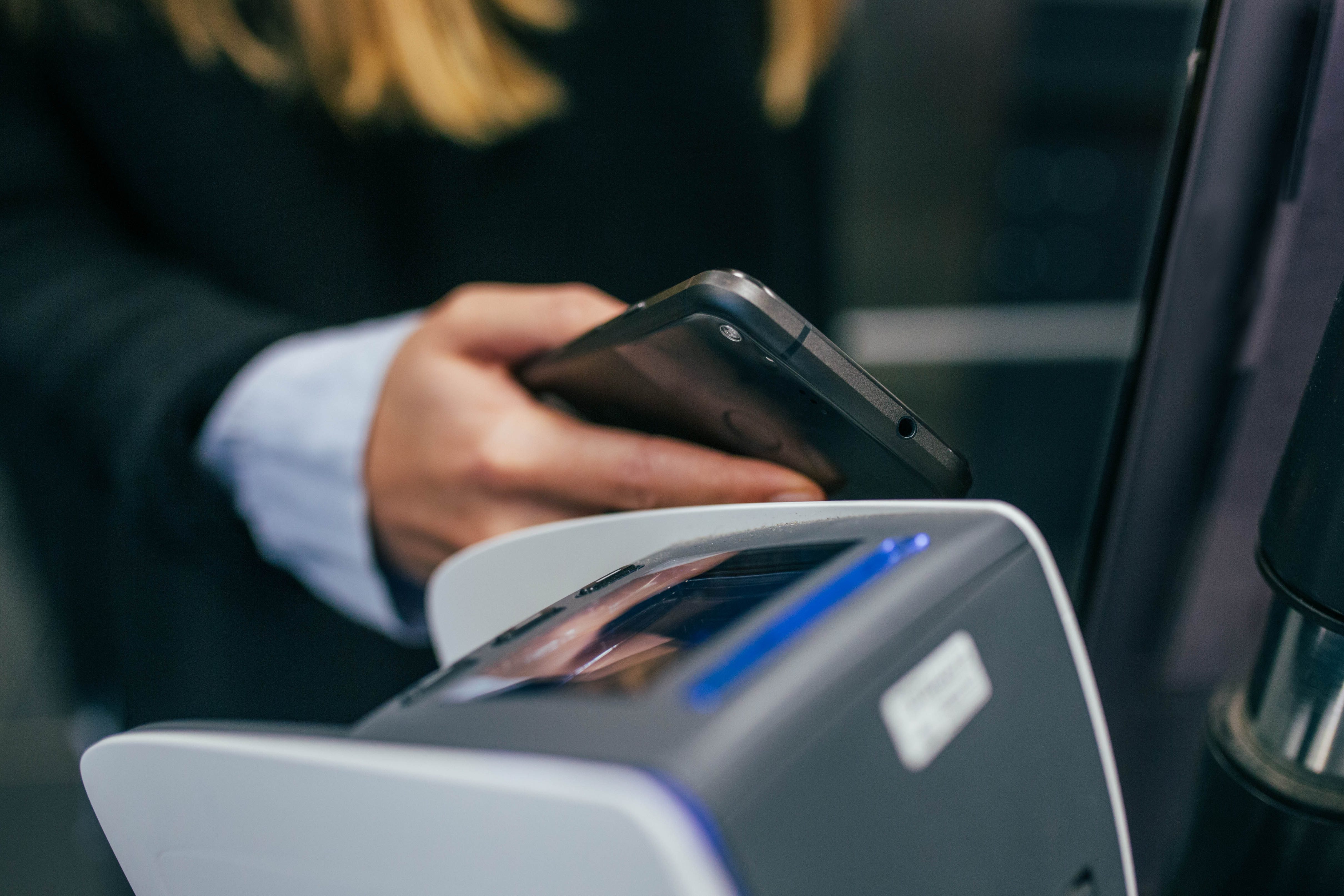
Contactless may be difficult, finicky, and hardware-dependent, says Orrock, but with the new mandate requiring everyone to go contactless by next year, the shift in the US is a matter of “when,” not “if.” Starbucks has helped socialize the concept of contactless payments here, but there is still a lot of education that must take place.
“Merchants have to look at this space for several reasons,” says Storbeck. “One, you have to be able to play in it because it’s going to impact your business. The second thing is that if you sit on the sidelines, you’re going to forgo a lot of learning. You cannot discount the learning.”
By learning, he means that retailers must look in the mirror and ask: Can contactless factor into my app? What is the customer experience and how can it be improved? What is the interaction at the point of sale with the cashier, and how can that be improved? How are returns handled?
US society will not remain card-based forever, Storbeck says. Ignoring contactless means taking a pass on learning about these things and the advantages that this self-knowledge could deliver for merchants.
In the near term, adds Storbeck, it will be important for US merchants to accept Asian mobile payment apps like Alipay, WeChat Pay, and Paytm purely to cater to the growing number of Chinese tourists visiting America. But in the long term, there’s definitely more at stake, and those who wish to become “top of wallet” in that game would do well to start sooner than later.
Conclusion
The truly one-stop shop, direct debit, and contactless payments: These could be the future of consumer financial activities, but retailers can only start playing in that future space if their payments acceptance switch allows it. Therefore, the power lies with the switches, and the playing field still very much remains to be seen.
Subscribe to our podcast via:
| |