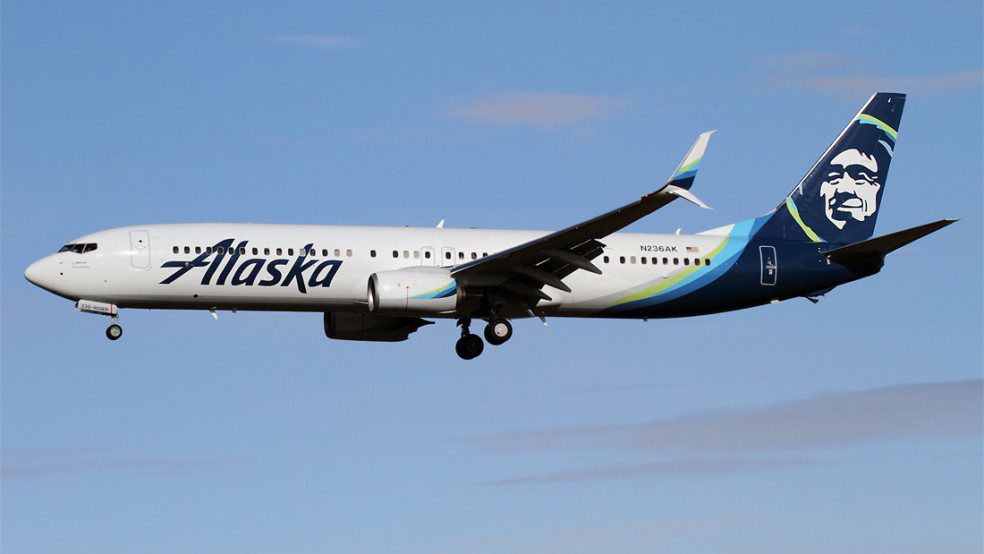
As loyalty programs become as valuable as the flights themselves, Bank of America and Alaska Air are doubling down on one of the industry’s longest and most lucrative partnerships.
The two companies have extended their co-branded credit card agreement in a multi-year deal, reinforcing a 30-year alliance that highlights a broader shift in aviation—the growing importance of financial partnerships as a core driver of airline profitability.
That shift was evident in 2025, when Alaska’s income from its card portfolio rose 10% during a banner year marked by the rebranding of its Atmos Rewards loyalty program and the launch of the premium Atmos Rewards Summit Card. At the same time, the airline moved to completing its integration with Hawaiian Airlines, a process that began in 2024 and is expected to wrap up this week.
That integration has also strengthened Bank of America’s hand. Hawaiian ended its relationship with Barclays after being folded into Alaska Airlines, aligning with Bank of America’s preference for fewer, deeper co-brand relationships rather than a sprawling partner network.
“Bank of America centers its card strategy along its highly respected BofA Rewards platform that ties together deposits and credit usage,” said Brian Riley, Director of Credit at Javelin Strategy & Research. “It does maintain a few co-branded relationships, but not to the scale of Citi or Chase.”
While the bank maintains a relatively modest presence in airline co-brands—also partnering with Air France and Spirit Airlines—it has built a dominant position in the cruise industry, with ties to Celebrity Cruises, Norwegian Cruise Line, and Royal Caribbean. The contrast underscores a deliberate strategy: concentrate on fewer partnerships but extract more value from each.
That philosophy is central to Bank of America’s broader credit card push. Earlier this year, the bank unveiled a revamp aimed at lifting its customer base from 69 million to 75 million over four years, with AI playing a key role in identifying new prospects and deepening engagement with existing clients.
Extending a High-Value Rewards Engine
The renewed partnership also signals continued investment in Atmos Rewards, which as quickly become a critical earnings engine for Alaska Airlines. The program generated $227 million in profits in just the first quarter of this year, with cash earnings rising 10% year-over-year—further evidence of how loyalty programs are evolving into standalone businesses.
Industry recognition has followed. WalletHub named Atmos Rewards the Best Frequent Flyer Program for the third consecutive year, reinforcing its status as a flagship offering.
This year, the program is adding flexibility that mirrors broader industry trends—travelers can now choose how they earn points, based on miles flown, ticket price, or number of flights taken. This gives Alaska Airlines a way to appeal simultaneously to frequent flyers, premium customers, and occasional travelers.
“Hawaiian Airline Credit Cardholders will merge into the Alaska Air loyalty program, where they will be able to take advantage of the Alaska Air Atmos program,” Riley said. “The new earning structure will offer three times each dollar spent, along with free baggage checks, a common industry threshold.”
More Cards—and More Competition
Bank of America is also preparing to expand the card lineup, with new Alaska-branded products and refreshes to existing ones expected, though details remain limited.
That strategy builds on last year’s launch of the Atmos Rewards Summit Visa Infinite card, with carries a $395 annual fee and is aimed squarely at premium competitors like the Delta SkyMiles Platinum ($350) and United Quest Card ($350). Alongside it sit the mid-tier Atmos Rewards Ascent Visa Signature card ($95 annual fee) and the Atmos Rewards Visa Business card.
The Summit card has already made an impact, earning Best New Personal Credit Card of 2025 from The Points Guy. Its features—including triple points on all foreign currency purchases and on rent payments (with a 3% fee)—reflect an effort to push rewards beyond traditional travel and dining categories.
A Partnership Tested by Headwinds
For Alaska Airlines, the deeper partnership comes at a pivotal moment. Like many carriers, it’s grappling with rising fuel costs and macroeconomic pressure. The airline recently reported an adjusted loss of $193 million for Q1 2026, warned that Q2 fuel expenses could increase by roughly $600 million, and withdrew its full-year profit forecast.
Against that backdrop, the growing importance of its loyalty and credit card business is hard to ignore. The combined airline still delivered a $146 million operating profit in 2025, but the trajectory suggests that future resilience may depend on financial products as on flight operations.