Pay Day Loans are an ugly business. They focus on the credit impaired, and it is not unusual to see interest rates north of 500%. Note that according to the most recent data from the Fed, the average credit card interest charged is in the range of 16%. Indeed, risk-based pricing on credit cards follows a higher range, but it is nowhere near the realm of payday lending.
The core problem with Pay Day lending is that they are lenders of last resort. Defaults are high, credit quality is low, and the expectation is that the borrower has nowhere else to go.
Th Consumer Federation of America released an interesting report that discusses the collection practices of Pay Day Lenders. The essence is that many small claims courts are jammed with litigation for non-payment and that the courts have now become an extension of the collection process.
This study explores the intersection of the growth of payday, vehicle-title, and other high-cost loans with the routinized use of supplemental collection proceedings in small-claims court. To do so, we gathered an original data set on small-claims court supplemental proceedings in the state of Utah.
Applying these methods leads to three empirical findings: (1) high-cost lenders dominated small-claims court dockets, accounting for a super-majority of all small-claims court lawsuits; (2) as a group, high-cost lenders were the most aggressive plaintiffs in small claims courts, suing over smaller amounts of money and for longer periods than other litigants; and (3) high-cost lenders are far more likely to obtain warrants for the arrest of their customers than plaintiffs in other cases.
Arrests for debt are not something you will typically find in credit cards. But for Pay Day lenders, particularly in the state of Utah, the long arm of the law will get you for non-appearance and contempt. In a table within the report, CFA points to 17,008 small claims filed between 2017 and 2018. Of these, 11,225 filings were for payday lenders, auto-title lenders, and other high cost creditors.
Moreover, in many lawsuits, high-cost lenders obtained arrest warrants on more than one occasion. For example, a high-cost installment lender petitioned for eight different post-judgment hearings in an Orem small-claims court case leading to three different arrest warrants for the borrower.
A high-cost lender called “Raincheck” initiated a 2016 lawsuit in the rural town of Vernal that led to five post-judgment hearings and three arrest warrants for a borrower with a $1,050 payday loan. Money 4 U’s 2015 lawsuit in Salt Lake City to collect a triple-digit interest rate loan of $1,170 led to years of litigation and four arrest warrants.
And, in a West Valley City case, Mr. Money sued to collect a mere $160.50 in 2014. After obtaining a judgment of $225.50, the lender continued to litigate for nearly half a decade, repeatedly demanding the borrower’s presence in court to answer questions about employment, bank accounts, and other assets.
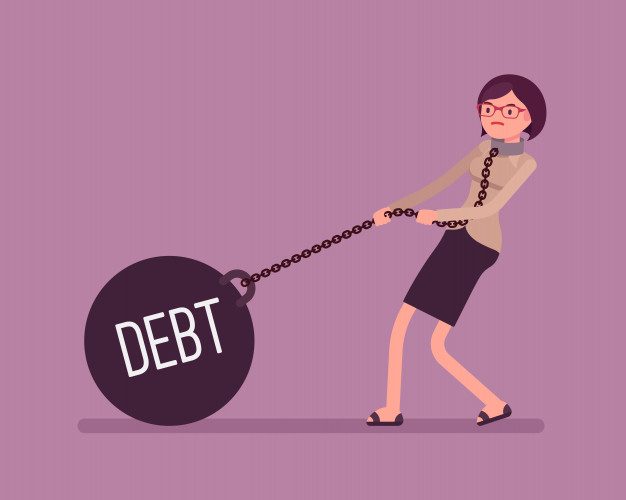
These practices are a far cry from credit card collections, where Mercator says it takes Brains, not Brawn, to collect money. Debtor prisons don’t work. Shaming, penalizing, and punishing well-intended debtors does not work.
Sometimes, credit losses are simply the cost of doing business in consumer lending.
Overview by Brian Riley, Director, Credit Advisory Service at Mercator Advisory Group