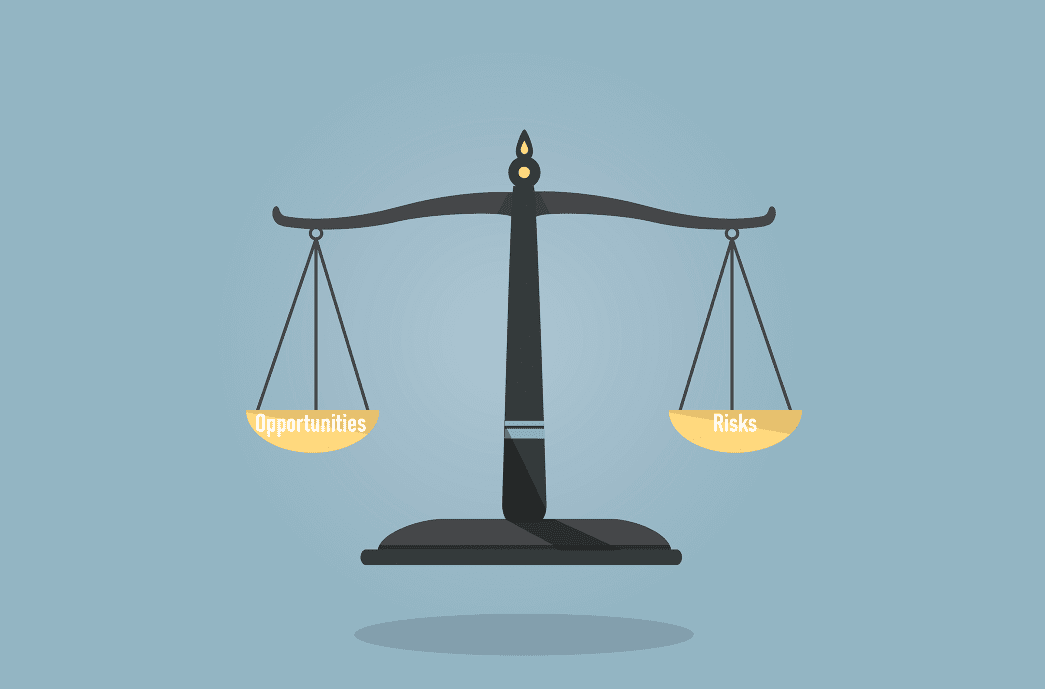
Credit is a risk business. Revenue comes from interest rates calibrated with risk. Expenses come from marketing, servicing the debt, and exposure to losses. The model is relatively simple when regulatory standards are applied. There is a fine line between the science of lending and the art of risk management.
This recent FinTech article provides a balanced view of recent trends in non-bank lending, which often focuses on short term investor returns rather than bank-grade lending, which must meet the demands of regulatory control and prudent lending.
- Back in early 2005, the concept of online lending was an anathema. If you needed a loan, you made an appointment to see a personal banker, donned a suit, and then prayed that your finances and business idea were enough in line with the bank’s borrowing requirements to get the loan approved.
- But later on that year, a disruptive UK fintech company called Zopa threw a spanner in the works and became the very first online P2P lender in the marketplace. Incumbent suspicions were raised. Zopa was viewed as niche and even shady by the establishment.
- Fast-forward 15 years and online lending has taken the marketplace by storm. Indeed, these days, the incumbents are the ones lining up to form collaborations with their shiny fintech counterparts.
- The game has well and truly changed as billions of dollars in lending transactions occur daily across the globe.
The big question here is how aggressively lenders should lend, and how they keep consumers out of trouble and risks in check.
- Elin Helander is a neuroscientist and the Chief Scientific Officer at Dreams, a leader in behavioural banking solutions that helps users set saving goals, invest and pay off debt.
- “A concerning by-product of the online lending revolution has been the emergence of buy now pay later schemes (BNPL) over the past couple of years which are marketed almost entirely to millennials, brainwashing them with the idea that debt is a good thing,” she says. “There’s something inherently and morally wrong about that, and if the online lending revolution doesn’t slow down any time soon, we risk a significant consumer financial crisis.”
- Helander goes on to say that with the introduction of new regulations like Open Banking and PSD2, the number of fintechs has skyrocketed, and the level of competitive intensity within the online lending market is now the highest it has ever been. “The online lending revolution does not look like it will slow down any time soon,” she points out, stressing that this level of competition has motivated fintechs to use “aggressive marketing tactics to catch the eye of consumers, luring people into making loans they might not necessarily need, and reaping profits from desperate borrowers.”
This conservative approach often meets with a broader view of risk and opportunity.
- “A concerning by-product of the online lending revolution has been the emergence of buy now pay later schemes (BNPL) over the past couple of years which are marketed almost entirely to millennials, brainwashing them with the idea that debt is a good thing,” she says. “There’s something inherently and morally wrong about that, and if the online lending revolution doesn’t slow down any time soon, we risk a significant consumer financial crisis.”
- Helander goes on to say that with the introduction of new regulations like Open Banking and PSD2, the number of fintechs has skyrocketed, and the level of competitive intensity within the online lending market is now the highest it has ever been. “The online lending revolution does not look like it will slow down any time soon,” she points out, stressing that this level of competition has motivated fintechs to use “aggressive marketing tactics to catch the eye of consumers, luring people into making loans they might not necessarily need, and reaping profits from desperate borrowers.”
- Patrick Meisberger, Managing Partner at CommerzVentures, a return-driven, non-strategic venture capital investment company founded in 2014, says the amount of regulation applied to lending is strict enough to protect customers as well as lenders. “There is a lot of regulation involved with lending overall, but this applies equally to banks, and it is right that consumers should be protected.”
- Meisberger explains that alternative lenders sprang up because incumbent banks were not sufficiently servicing the market demand. This revolution was driven by the incumbent bank’s lack of a digital offering. “Their reliance upon lengthy processes that were paper-based or requiring ‘in person’ applications at local branches, meant that lending challengers could reach consumers – especially the unbanked – by taking advantage of advances in Big Data and AI.”
But COVID certainly made things more complex.
- On the consumer side, the uncertainty of COVID-19 drew customers to digital-first credit options. BNPL firms like Klarna have boomed, offering instant credit for purchases at the point of sale. Responsible credit card providers like Tymit offer flexible lending options, letting customers choose which purchases carry interest and select their own instalment-based payment plans.
- “By doing away with revolving balances and minimum payments, online lending providers are giving consumers better transparency over what they owe, which is vital in these uncertain times,” says Johnson.
The conversation will certainly continue, but the trend is important. Banks may need to be less risk averse in many instances. But the need to be safe and sound trumps all other issues, particularly in regulated financial institutions. For fintechs, perhaps not so much, but watch out for the long game. Banks such as Barclays, Bank of Montreal, Chase, Citi, and Scotiabank have been in the consumer lending business for more than a century, with no indications of a slowdown.
Overview by Brian Riley, Director, Credit Advisory Service at Mercator Advisory Group